2026-09-15
Retail displays and commercial furniture are used differently from ordinary residential cabinets. Display doors may be opened repeatedly during a working day, office storage is often shared by several users, and sliding cabinet doors may need to operate where a hinged door would interfere with the surrounding space. The hardware must therefore fit the door or frame, support the required movement, and remain practical to install and adjust across the project.
The visible furniture design is only one part of the decision. Door construction, opening frequency, weight, closing behavior, installation sequence, and available clearance all influence the correct choice. This guide explains how to evaluate those conditions and match them with hinge and sliding-door solutions for retail displays, offices, showrooms, hotels, and other commercial furniture projects.
Commercial furniture may combine several hardware types in one project. Retail displays can use concealed hinges for aluminum-frame doors, while office storage and showroom furniture may use hinged doors, drawers, or sliding doors. The door or frame structure should be identified before the hardware is compared.
The main checks are door and frame compatibility, expected use frequency, door or drawer load, closing behavior, installation and adjustment efficiency, and the available operating space.
These requirements are connected. A concealed hinge must still match the frame and provide the needed adjustment, while a sliding system must be assessed together with the door weight, track, rollers, and clearance.
Begin with the physical relationship between the door and cabinet. Thin aluminum-frame doors require a hinge that matches the frame profile and mounting space. Thicker doors, frameless cabinets, and different overlay conditions may require another hinge geometry or mounting plate. For sliding furniture, confirm door size, panel weight, track position, and clearance before selecting the system.
A concealed hinge is useful when the hardware should not dominate the visible face, but it still needs to provide the required movement and adjustment. A sliding door is selected when the furniture layout benefits from travel along a track rather than a side swing.
Retail and commercial furniture may be opened by staff, customers, cleaners, and maintenance teams. Review the expected frequency together with door size, door weight, the number of hinges, and the way the cabinet will be used. For drawers, apply the same principle to the stored load and operating frequency.
No single capacity figure replaces a project review. The hardware must fit the complete furniture construction, and batch projects benefit from a consistent configuration that is easier to inspect and maintain.
Soft-close controls the final movement and can reduce closing impact and noise. Push-to-open suits handle-free furniture, where pressing the front releases the door. A sliding-door system is useful when a side-opening door would interfere with an aisle, adjacent cabinet, or narrow working area.
The function should match the furniture's operating pattern, front design, available clearance, and expected use. Sliding cabinets also require attention to travel stability and prevention of hard contact between passing doors.
Installation efficiency affects commercial project cost. Review how the hardware attaches, whether the door can be removed, and how the front can be adjusted after installation. These details matter when many similar cabinets must be assembled to the same specification.
A repeatable mounting and adjustment method also makes later maintenance easier. The hardware should therefore be judged by both normal movement and the work required before and after installation.
Retail and showroom furniture is judged from the front, so exposed hardware, uneven gaps, and interference with nearby furniture can affect the result. Concealed hinges can keep the visible face clear when the construction allows it, while sliding doors can reduce the front swing area.
The practical question is whether the selected hardware supports the layout while keeping the door aligned and the movement controlled.
For aluminum-frame display doors, check the frame profile, door thickness, mounting position, and acceptable level of visible hardware. A concealed hinge with damping and three-dimensional adjustment can be considered when the project requires a clear exterior and accurate alignment.
Retail display furniture benefits from hardware that supports repeated opening while maintaining a consistent appearance across units. Review installation speed, closing noise, door alignment, adjustment, and any handle-free opening requirement.
Office and commercial storage cabinets may use hinged doors, drawers, or both. Review shared use, door or drawer load, front alignment, and future maintenance. Hinges and drawer hardware should be selected separately for their respective applications.
Sliding cabinet doors are useful where a hinged door would obstruct circulation or adjacent furniture. Review door weight, track arrangement, roller stability, soft closing, and collision prevention, especially on large display walls.
For batch projects, confirm that similar door and frame conditions can use the selected hardware, that installation can be standardized, and that replacement and maintenance procedures are clear.
The criteria above provide a practical basis for comparing commercial-furniture hardware. The following section applies them to three specific products from our own range, matched to three different door conditions rather than ranked as better or worse.
D HINGE is a mortise-in hinge for thin-line aluminum-frame doors. Its components are mounted inside the door and cabinet, which keeps the visible area clear. An integrated damper supports smooth operation, while three-dimensional adjustment helps align the door after installation. These characteristics make the series relevant to display cabinets and furniture where the frame structure, concealed appearance, and adjustment range all need to be considered together.
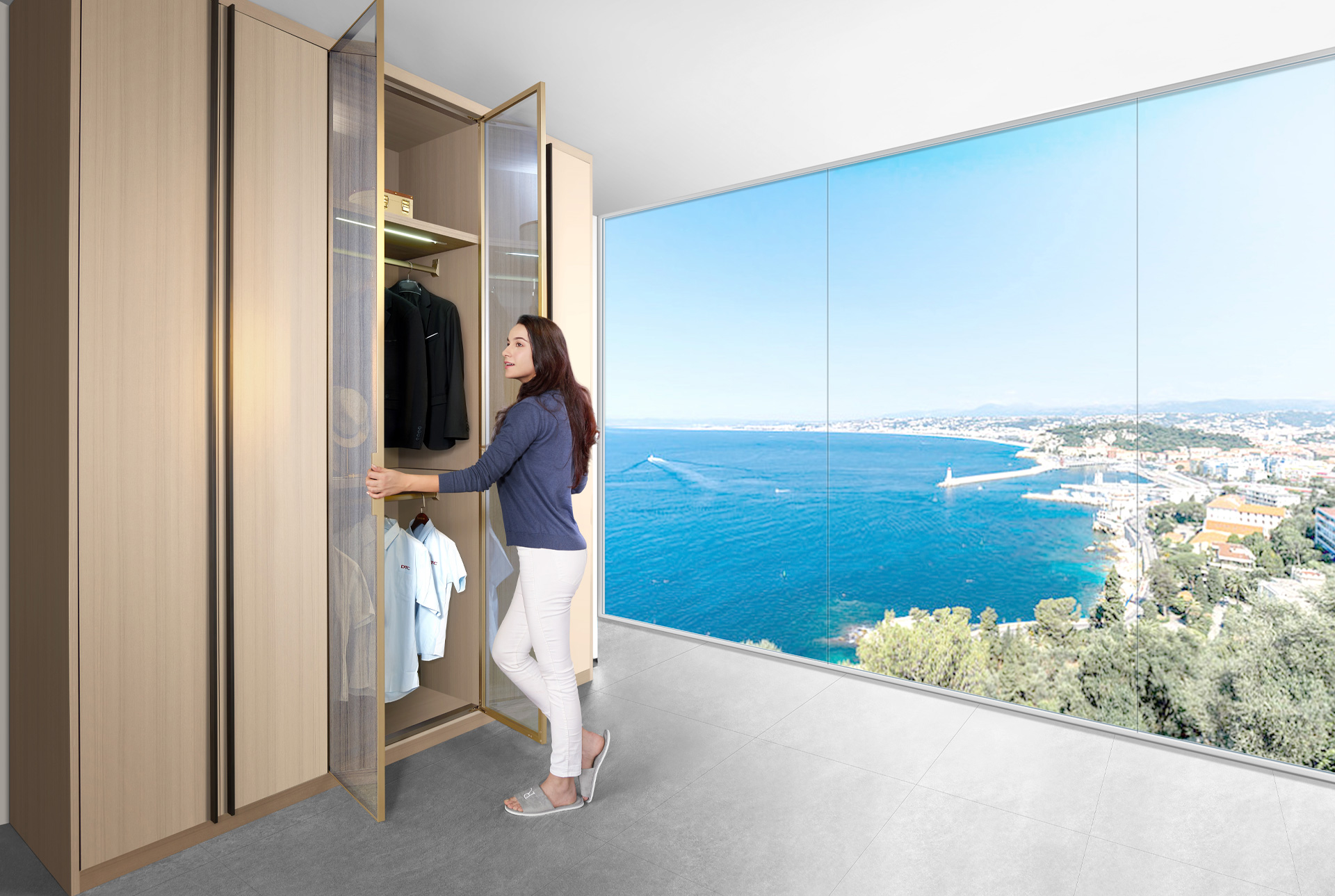
The product should be matched to the actual aluminum-frame door and cabinet construction. The important point is not simply that the hinge is concealed, but that the mortise-in arrangement, frame profile, door movement, and adjustment method are compatible with the project.
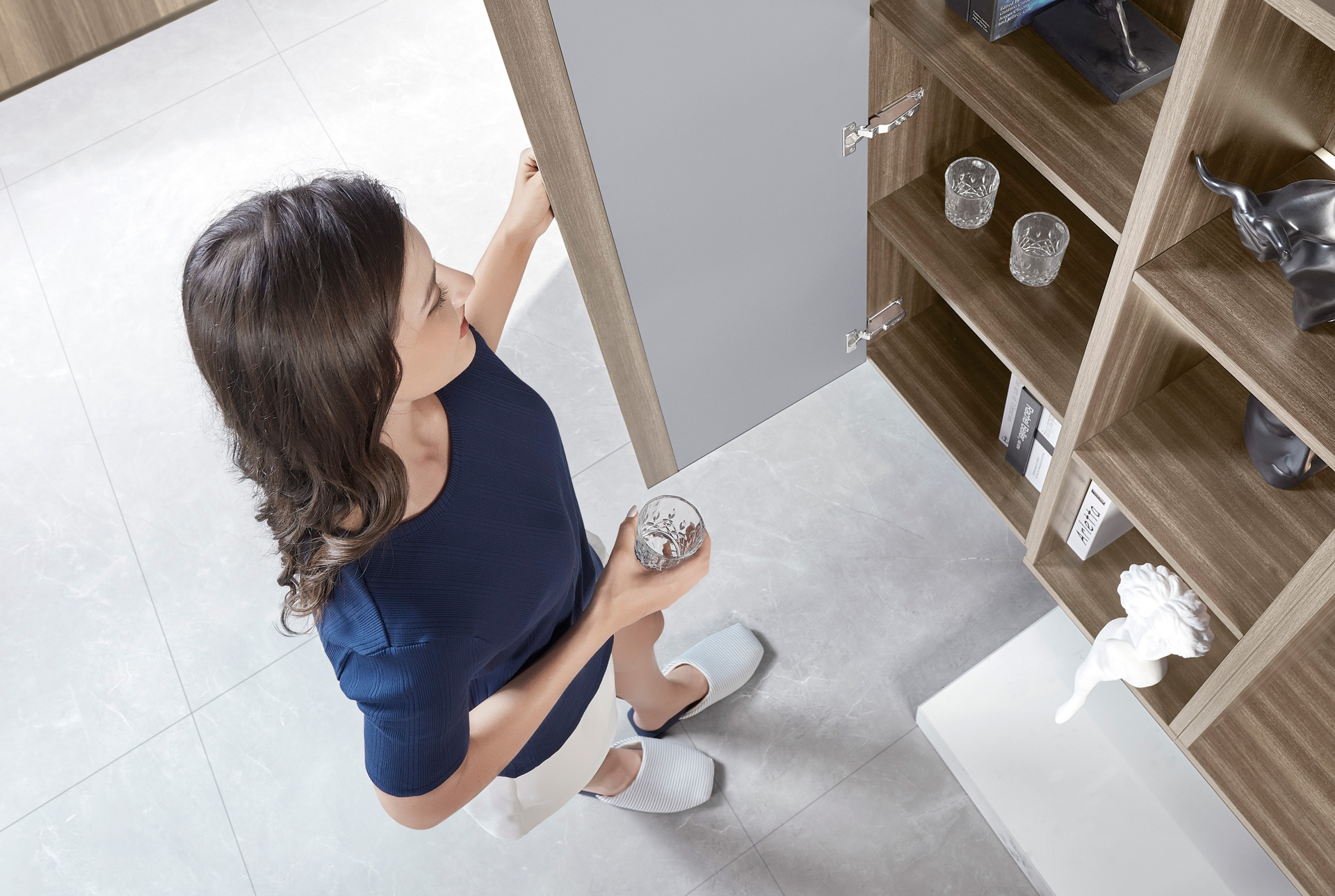
PIVOT-STAR C81 is a concealed soft-close hinge series with variable closing-speed adjustment. Its product page describes three ways to connect the hinge to the mounting plate: connecting the back and snapping on the front, connecting the front and snapping on the back, or snapping the front and back together. This flexibility can help when a project requires a repeatable attachment method across multiple doors.
The series also offers different mounting-plate options and adjustment of the soft-close speed. For commercial cabinets, these features are useful when doors vary in size or weight and when the installation team needs to align the fronts or remove doors during later work. The correct hinge version and plate still need to be selected for the door construction and the required opening.
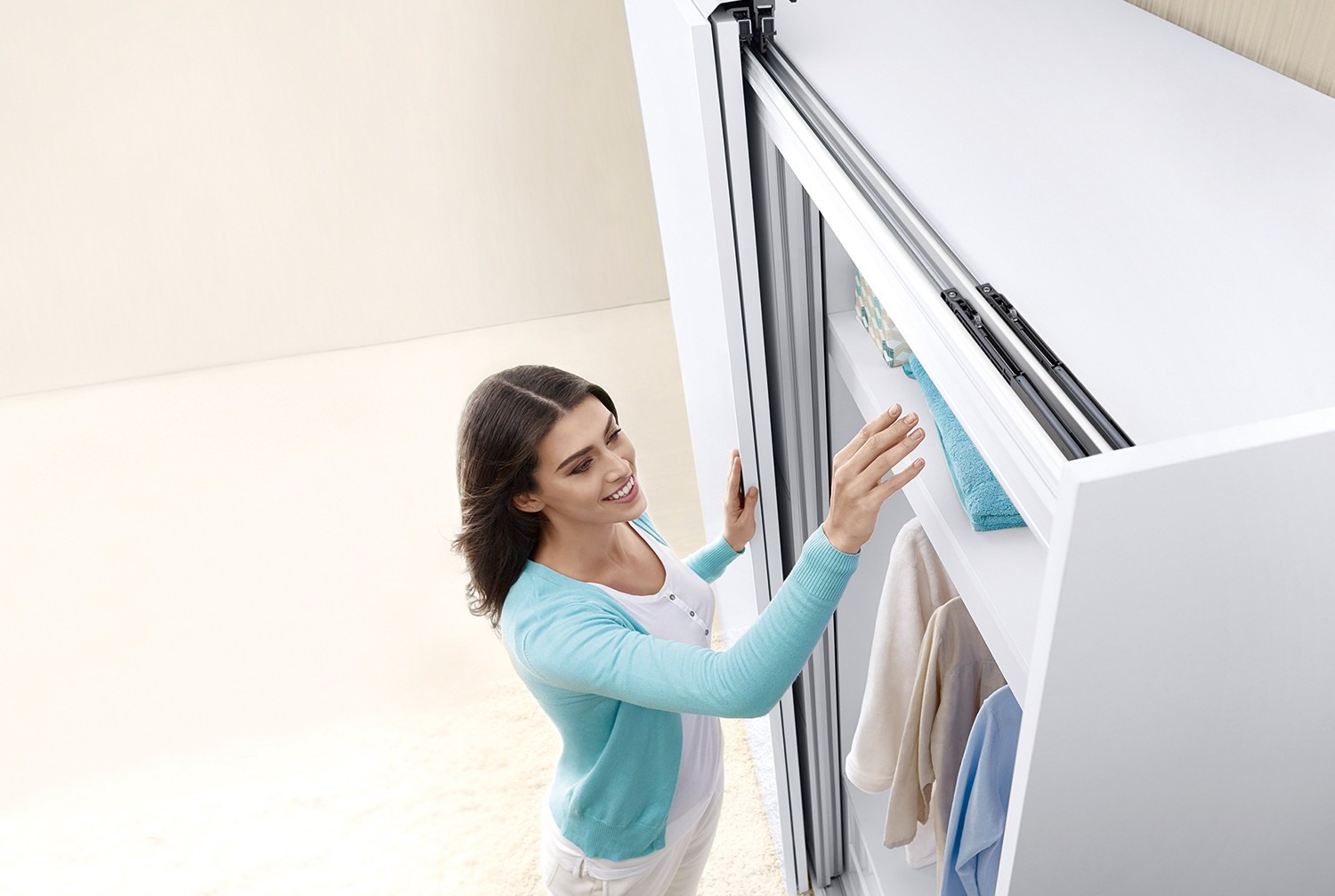
TRACK-PRO is a sliding-door system for situations where a hinged door is impractical because space is limited. Its soft-closing mechanism supports gentle opening and closing. Dual-roller trolleys stabilize the travel and are designed to prevent roller derailment, while integrated bumpers help prevent hard collisions between passing doors.
This makes TRACK-PRO a suitable option to evaluate for large cabinet doors, display walls, and other commercial furniture where the door needs to travel along a track rather than swing into the surrounding space. The project team should still check the door dimensions, weight, track layout, and available installation clearance before confirming the configuration.
The three products serve different door conditions. D HINGE is intended for thin aluminum-frame doors where concealed installation and three-dimensional adjustment are important. PIVOT-STAR C81 is a concealed soft-close hinge option for hinged cabinet doors where attachment flexibility and closing-speed adjustment matter. TRACK-PRO is a sliding-door system for large or space-constrained furniture where a side swing is not practical.
This is not a ranking of product levels. The correct choice depends on the door construction and furniture layout. A project with several furniture types may need more than one solution, provided that each selection is confirmed against the relevant door, frame, weight, clearance, and installation conditions.
Commercial furniture projects need a supplier that can support different door structures and opening methods within a controlled product system. Our company covers hinge series, drawer slides, drawer systems, lifting systems, sliding-door systems, connecting fittings, and kitchen storage systems. This broader range can help a furniture manufacturer coordinate hardware choices across retail displays, offices, showrooms, and other commercial interiors.
The practical value of manufacturing support is found in specification control, production consistency, quality procedures, and supply coordination. Before production, the project team should confirm the door type, hardware version, opening function, adjustment needs, installation method, and replacement requirements. That information gives the manufacturer a clearer basis for preparing a repeatable commercial-furniture solution.
Commercial furniture hardware should be selected from the door and cabinet outward. Start with the door or frame structure, then review usage frequency, weight, opening method, installation sequence, adjustment, appearance, and available space. This approach keeps the hardware decision connected to the actual furniture rather than to a general product label.
For thin aluminum-frame display doors, D HINGE can be evaluated for its mortise-in installation, concealed appearance, damping, and 3D adjustment. For hinged commercial cabinet doors, PIVOT-STAR C81 provides concealed soft-close operation, variable closing-speed adjustment, and flexible attachment methods. For large or space-constrained sliding doors, TRACK-PRO provides a soft-closing sliding system with dual-roller travel stabilization and collision-prevention bumpers. Detailed specifications are available on the official product pages for D HINGE, PIVOT-STAR C81, and TRACK-PRO.
Retail display furniture may use concealed hinges for cabinet doors, hinges for aluminum-frame doors, drawer slides or drawer systems for storage areas, and sliding-door systems where hinged doors would require too much space.
Check the aluminum-frame profile, door thickness, mounting space, hinge position, closing function, and adjustment requirements. The hinge should be compatible with both the door frame and cabinet construction.
Consider the door size, door weight, expected opening frequency, closing behavior, installation consistency, adjustment requirements, and future maintenance needs.
Concealed hinges place the main hardware inside the door and cabinet, helping maintain a clearer visible surface while still allowing the door to open, close, and be adjusted correctly.
Hinged doors rotate from one side and require front swing space. Sliding doors move along a track and can be more suitable where a swinging door would interfere with nearby furniture or circulation.
Soft-close controls the final closing movement, helping reduce impact and noise. The function still needs to match the door size, weight, hinge or sliding system, and expected usage.
D HINGE is a mortise-in hinge for thin-line aluminum-frame doors. Its components are mounted inside the door and cabinet, with an integrated damper and 3D adjustment for door alignment.
PIVOT-STAR C81 provides three hinge-to-plate attachment methods, variable soft-close speed adjustment, and different mounting-plate options. These features support flexible installation and door alignment in commercial furniture projects.
TRACK-PRO can be considered when a large cabinet door needs to slide or when a hinged door would be impractical because of limited space. The door dimensions, weight, track layout, and installation clearance should be confirmed before selection.