2026-09-15
In high-end custom cabinetry, the drawer system has to fit the cabinet before it can perform well. A drawer may carry cookware, clothing, bathroom supplies, or other frequently used items, but its daily performance depends on more than the stated load rating. The available cabinet space, drawer dimensions, front alignment, opening method, and installation process all affect the result.
This is why a drawer system should be selected as part of the cabinet design rather than added after the box has been finalized. The following guide explains the main factors that matter in custom projects and shows how a side-based drawer component and its supporting hardware can be evaluated for different applications.
A drawer system is not the same as a drawer slide. A slide is the running mechanism that supports opening and closing. A drawer system may also include the drawer sides, front connection, locking parts, adjustment controls, and the selected closing or opening function. In a custom cabinet project, these parts work together to determine how the drawer is assembled, aligned, removed, and used.
The distinction is important when comparing suppliers. A side-based drawer component is not necessarily a complete drawer box with every panel included. Its side profile and connection parts are combined with the cabinet maker's selected drawer front, base, back, and running hardware. The specification therefore needs to state clearly which components are included and which parts remain part of the cabinet manufacturer's construction.
For a high-end project, the basic questions are practical: Does the component leave enough usable interior space? Can the front be aligned after installation? Will the running hardware match the drawer size and load? Can the drawer be removed without damaging the cabinet? And does the chosen soft-close or push-to-open option fit the way the cabinet is designed to be used? For a broader comparison of slide types, mounting methods, and drawer-slide applications, see our Drawer Slide Selection Guide.
Start with the available cabinet opening and the planned drawer dimensions. Side thickness, drawer depth, front height, and the clearance required by the running hardware all affect usable capacity. A slim side profile may help preserve interior space, but it still needs to work with the drawer construction and the required load. The slide length must also match the drawer depth; full extension is useful only when the cabinet can accommodate the selected travel length.
The correct capacity depends on the actual contents and the way the drawer will be used. Kitchen drawers holding cookware usually face a different load pattern from wardrobe or bathroom storage. Wide drawers also place greater demands on synchronized movement and alignment. A stated capacity should therefore be considered together with drawer width, depth, frequency of use, and the stability required when the drawer is fully loaded and extended.
Soft-close and push-to-open solve different design requirements. Soft-close controls the final closing movement and is suited to drawers with handles or another clear pulling point. Push-to-open supports handle-free furniture, where pressing the front releases the drawer. The selected function should match the front design, the available installation space, and the expected daily use. It should not be treated as a substitute for correct sizing or alignment.
Custom furniture often requires adjustment after the drawer front has been fitted. Height and side adjustment can help installers align several fronts across one cabinet run, while a practical locking and release arrangement can reduce service time. These details become more important in batch production, where a repeatable installation method is easier to control than a solution that depends on extensive manual correction.
The right configuration depends on the cabinet's purpose rather than on the word high-end alone. In kitchens, the selection should account for heavier contents, frequent opening, and the need to keep adjacent fronts aligned. In wardrobes and storage cabinets, internal capacity and front alignment may be more important than a high load rating. For bathroom furniture, the cabinet maker should confirm the environment, cleaning routine, material selection, and finish requirements before finalizing the hardware.
Handle-free cabinets require an additional check. The push-to-open mechanism must work with the front thickness, the cabinet opening, and the resistance created by the drawer load. If a project contains several drawer widths, each size should be reviewed rather than assuming that one setting will behave identically across the entire installation.
For batch custom projects, consistency is also a selection factor. Matching component sizes, repeatable adjustment points, clear installation steps, and a straightforward removal method can reduce variation between cabinets and make later maintenance easier. These are project-control benefits, not claims that a particular mechanism will solve every installation problem.
The criteria above provide a practical basis for comparing drawer solutions. The following section applies them to one specific example from our own drawer-system range: DRAGON-PRO.
Our DRAGON-PRO range is designed for drawer applications that require a slim side profile, full-extension movement, and a coordinated set of drawer functions. It uses 13 mm straight drawer sides, full-extension slides, 40 kg and 50 kg capacity options, and a choice of soft-close or push-open operation. The locking devices engage automatically during installation, and release levers allow the drawer to be removed.
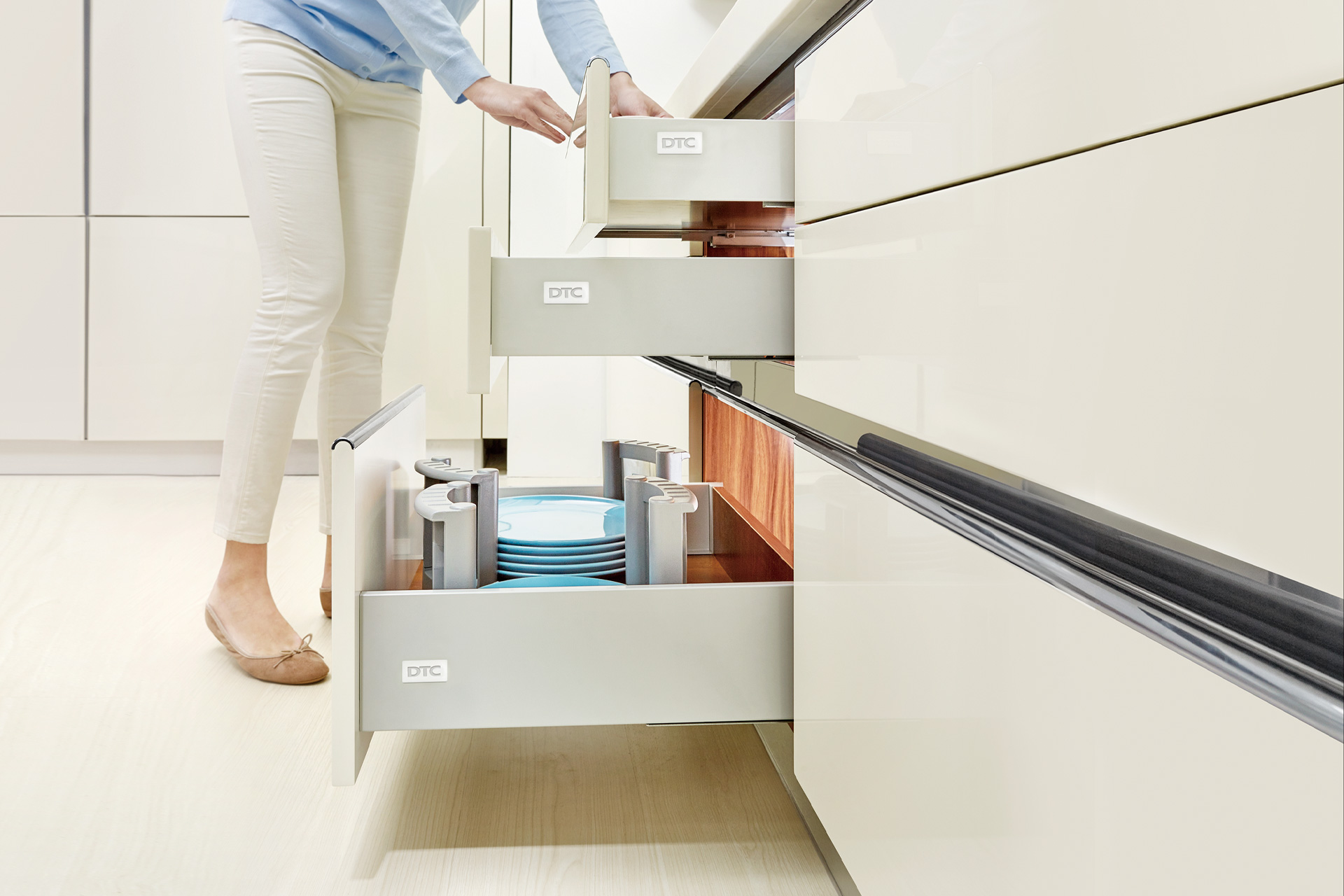
The side adjustments and height adjustments are concealed in the drawer sides behind cover caps. For a custom cabinet project, that arrangement matters because it allows the installer to fine-tune the front after the drawer has been fitted while keeping the adjustment hardware visually contained. It also gives the project team a defined method for removing the drawer when inspection or service is required.
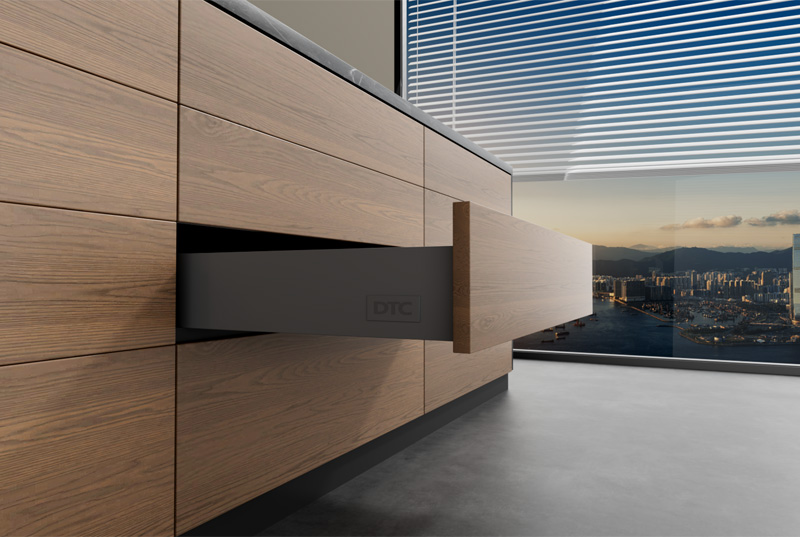
DRAGON-PRO should be specified as a drawer component and running solution within the cabinet construction. It should not be described as a complete drawer box by itself. The cabinet maker still needs to confirm the compatible front, base, back, cabinet opening, drawer dimensions, actual load, and selected operating function. The 40 kg or 50 kg option should be chosen from the project load rather than from appearance or marketing language.
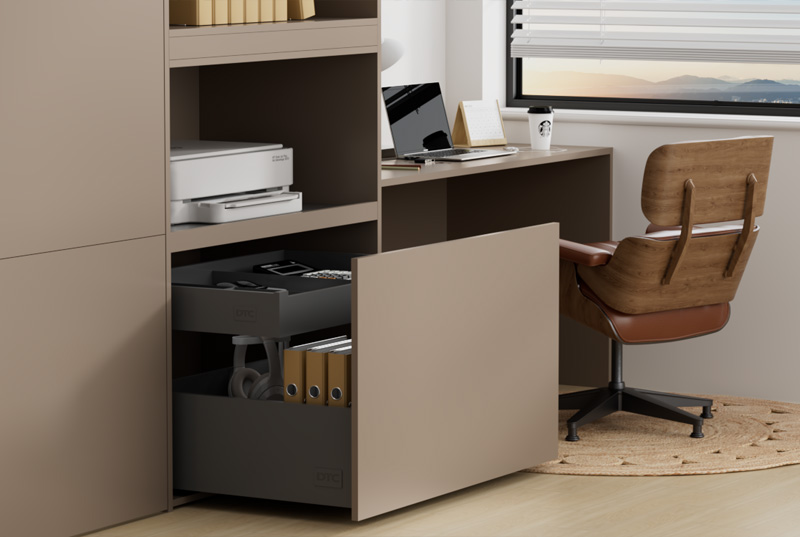
For high-end kitchen and wardrobe projects, the value of this type of system is found in the relationship between the side profile, the running hardware, the adjustment method, and the cabinet design. No single feature replaces that compatibility check. A slim component can preserve space, but the final result still depends on correct dimensions, installation, and load distribution.
A custom furniture supplier needs more than a product name. It needs stable specifications, repeatable production, testing procedures, and a supply arrangement that can support the planned project volume. Our company operates six production bases with more than 750,000 square metres of production space and supplies customers in more than 130 countries. These figures describe manufacturing scope; they do not remove the need to check the specification of each drawer application.
For a project review, the useful questions are straightforward: Which drawer sizes are required? Which capacity is appropriate? Is the front handle-free? Which adjustment range is needed? How will the drawer be installed and removed? What components are included in the quotation? Answering these questions before production helps the cabinet manufacturer compare solutions on the basis of fit and repeatability rather than on a general quality label.
High-end custom cabinetry requires a drawer solution that matches the cabinet structure, the intended load, the front design, and the installation process. The selection should begin with dimensions and use conditions, then move to capacity, opening and closing function, adjustment, and maintenance. The distinction between a drawer slide, a side-based drawer component, and a complete drawer box should remain clear throughout the project.
For projects that require a slim side profile, full-extension movement, adjustable fronts, and soft-close or push-to-open options, DRAGON-PRO can be evaluated as part of the cabinet construction. The final choice should still be confirmed against the actual drawer dimensions, load, cabinet opening, and required components. Detailed specifications are available on our official DRAGON-PRO product page.
Check the cabinet and drawer dimensions, actual load, running stability, opening function, front adjustment, installation method, and removal requirements.
A drawer slide is the running mechanism. A drawer system may also include the drawer sides, front connection, locking parts, adjustment controls, and selected soft-close or push-to-open function.
It can preserve more usable interior width than a thicker side, but the result also depends on the cabinet opening, drawer construction, slide clearance, and front design.
Base the choice on the actual contents, drawer width and depth, frequency of use, and the stability required when the drawer is fully extended. DRAGON-PRO is offered with 40 kg and 50 kg capacity options.
Soft-close controls the final closing movement. Push-to-open releases a handle-free drawer when the front is pressed. The function should match the cabinet front and installation conditions.
DRAGON-PRO is intended for drawer applications in the home. Suitability for a particular kitchen or wardrobe must be confirmed against the cabinet dimensions, load, front design, and selected configuration.
The concealed height and side adjustment controls allow the installer to align the drawer front after installation and maintain a consistent appearance across a cabinet run.