2026-05-27
Walk into a finished high-end kitchen or wardrobe today and one detail is often missing: visible hinges. Concealed hinges have become standard in most quality custom cabinetry because they create the clean, uninterrupted surfaces that modern designs require. The benefit goes beyond looks. When doors close quietly and stay aligned over years of use, the difference shows up in both client satisfaction and fewer callbacks.
For fabricators and installers, the practical advantages appear during fitting. Frameless cabinets especially need consistent reveals across multiple doors. Hinges that combine fast mounting with reliable multi-axis adjustment can noticeably reduce time on site while improving final alignment. This article examines the main types of concealed hinges, what actually matters when choosing between them.
Cabinet construction, door style, and installation conditions all influence which concealed hinge performs best. The key distinctions how the cabinet is built, how the door covers the opening, what functions are needed, and how the hinge mounts shape both the finished appearance and how smoothly the work goes on site. Getting these choices right reduces rework and helps the hardware perform reliably over time.
Frameless European-style cabinets dominate most current high-end work. The door mounts directly against the side panels, placing real demands on cup depth accuracy and adjustment range. Strong concealed hinges for this construction allow installers to fine-tune reveals even after the carcasses are leveled and secured, which matters when working across long runs of cabinetry.
Face-frame cabinets follow the traditional American approach with a front frame around the opening. These require hinges with specific offsets and mounting geometry so the door clears the frame cleanly. Choosing the wrong hinge here often leads to binding, dragging, or uneven gaps.
Full overlay hinges let the door cover the entire side panel. This produces the cleanest visual result and remains the most common choice in contemporary projects. Because the door fully covers the cabinet side, even small inconsistencies in reveal become immediately visible, making precise adjustment capability especially important during installation.
Half overlay hinges cover only part of the side panel. They appear most often with paired doors sharing a center partition. Careful planning of the overlap dimension is essential to prevent doors from interfering with each other during operation.
Inset hinges place the door inside the cabinet opening so the front face sits flush or slightly recessed. This configuration suits classical and transitional designs. It requires accurate door edge machining and careful hinge placement to achieve even reveals on all four sides.
Standard hinges deliver basic open-and-close performance at a lower cost. They work adequately in low-traffic storage or budget-driven specifications where soft-close is not a priority.
Soft-close models use built-in damping to bring the door to a quiet, gentle close. This reduces impact on finishes and hinge components, helping maintain alignment and appearance over years of use. Most quality soft-close systems deliver consistent performance across the door weights and sizes typical in residential and light commercial work.
Special-function models address specific conditions. Adjustable closing speed lets installers fine-tune heavier or lighter doors directly on site. Wide-angle versions open beyond the standard 110 degrees when full access improves usability. Models designed for thick doors or aluminum frames handle construction details that standard hinges cannot manage well without modification.
Traditional screw-on hinges require pilot holes and multiple screws into both the door and mounting plate. The connection is solid, but the process takes more time during production and on-site fitting.
Fast-install snap-on systems have become the preferred choice for most professional workshops. The hinge attaches to a pre-mounted plate with a simple push or lever action. Many current designs support multiple attachment sequences, which helps when fitting several hinges on tall doors. Removal for later adjustment remains equally straightforward, saving time when fine-tuning is needed.
Concealed hinges appear across kitchen cabinetry, wardrobes, bathroom vanities, entry storage, bookshelves, and office furniture. They perform especially well in minimalist full-house projects where hardware should remain invisible while delivering reliable daily function. In commercial settings such as hotels and retail, quiet operation and durability help maintain appearance under higher traffic without rapid finish degradation.
The DTC C80, C81, and C82 series represent current professional-grade solutions developed to meet real installation and performance demands. All three share fast-install snap-on technology and multi-axis adjustment, each series emphasizes different strengths depending on project requirements.
The C80 series focuses on dependable soft-close performance with the damper built into the hinge arm. This layout delivers smooth, even door motion while keeping the visual profile clean. It supports a wide range of door thicknesses through model selection and includes full overlay, half overlay, and inset versions. Specialized models handle glass doors, aluminum frames, wide-angle needs, and thicker panels.
Installation relies on straightforward snap-on attachment. Three-dimensional cam adjustments for height, depth, and side position allow accurate alignment without repeated remounting. Many workshops find this combination of simple mounting and reliable tuning effective across both factory production and on-site work, especially when project timelines are tight.
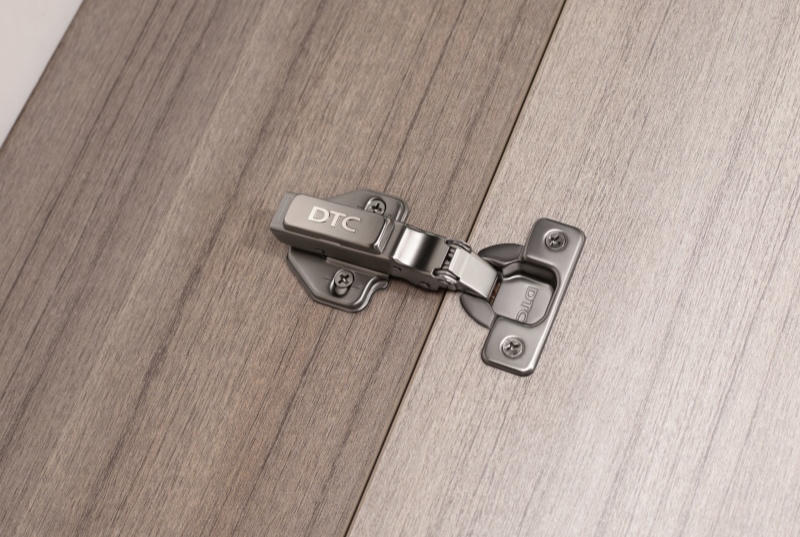
The C81 series stands out for its variable soft-close speed adjustment, which lets installers fine-tune closing behavior for doors of different sizes and weights directly on site. The anyway snap-on system supports three attachment sequences, making it easier to maintain consistent alignment when fitting multiple hinges on tall cabinets — a common situation in full-house projects.
Four-dimensional tuning and spiral-cam mechanisms support repeatable precision. The series includes variants for thick doors, angled applications, and aluminum frames. Ergonomic release levers allow secure attachment and simple removal when adjustments are needed later, which installers often appreciate during final fitting stages.
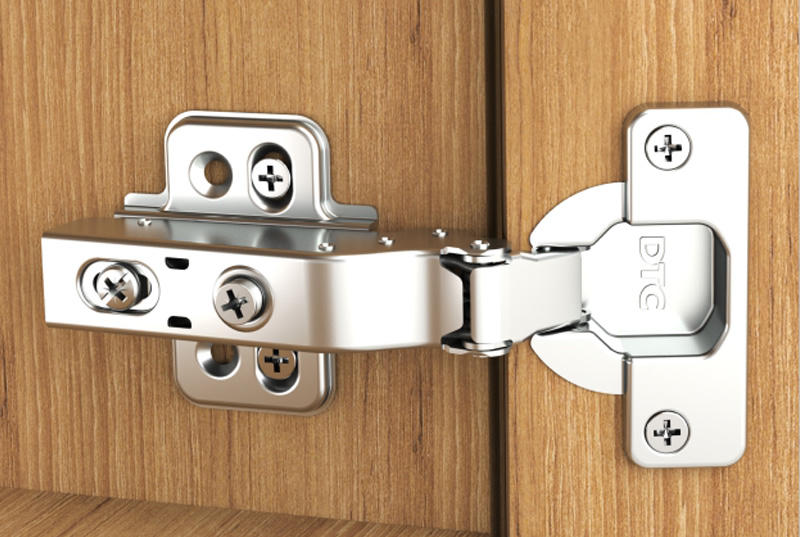
The C82 series targets more demanding applications that require enhanced control and specialized configurations. It retains the core advantages of anyway snap-on installation and cam-adjustable soft-close while offering dedicated models for thick doors, angled doors, and aluminum-framed constructions. Multiple attachment methods strengthen the hinge-to-plate connection on larger or more complex pieces.
Cam adjustments remain accessible for final alignment. The overall design balances durability with installation practicality, making it suitable for premium residential work and commercial environments where consistent long-term performance under varied conditions is important. Installers working on high-specification projects often select this series when specialized door types or heavier panels are involved.
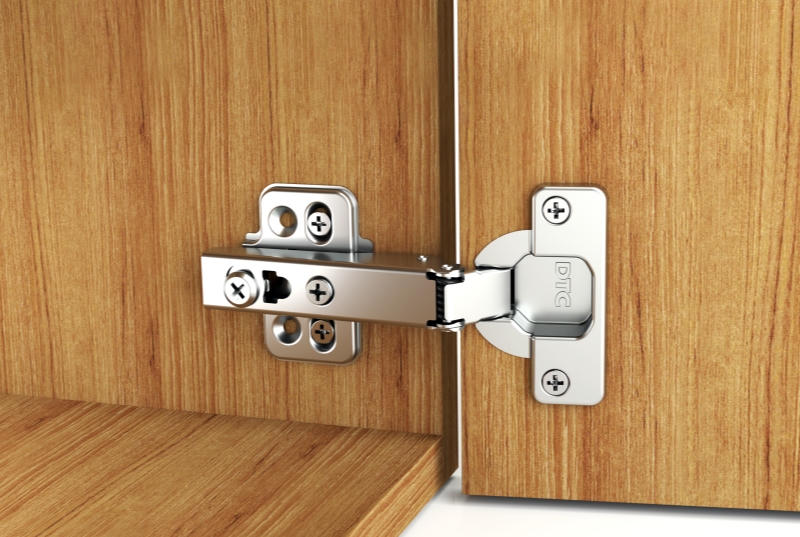
DTC is a leading global manufacturer of furniture hardware. The company possesses extensive product lines and technical capabilities, supported by more than 1,300 global patents. It has obtained factory certification from TÜV Rheinland and complies with over 30 international standards, including American BHMA and European EN requirements.
DTC hinges are manufactured with a focus on long-term reliability and project practicality. Rigorous opening and closing cycle testing combined with salt spray testing ensures strong durability and corrosion resistance, making them suitable for high-frequency use environments.
The range offers wide compatibility across frameless European-style and face-frame American-style cabinetry, various door thicknesses, and specialized constructions such as glass doors and aluminum frames. Automated production and strict quality control throughout the manufacturing process support stable supply and consistent quality, which is particularly important for large-scale projects requiring batch delivery.
DTC hinges provide a reliable balance of performance, durability, and supply stability, making them a suitable choice for full-house customization and high-end residential and commercial projects.
Concealed hinges deliver the clean appearance, quiet operation, and installation efficiency that modern cabinetry demands. For full-house customization, luxury residential projects, and commercial fit-outs, DTC hinges provide professional-grade options that address varied cabinet constructions and door specifications without compromising performance, give professional teams reliable hardware solutions that consistently meet the standards expected in high-quality work.
What distinguishes full overlay from inset concealed hinges?
Full overlay hinges allow the door to cover the entire cabinet side panel, producing the cleanest visual appearance with minimal visible reveals. Inset hinges position the door within the cabinet opening so the door face aligns with or sits slightly behind the cabinet front edge. The choice depends on the desired aesthetic, with full overlay favored in most modern projects and inset used where classical or transitional styling is specified.
How does soft-close technology affect long-term performance?
Soft-close damping reduces impact forces at the end of the closing cycle. This protection lowers stress on the hinge mechanism, door edges, and cabinet frames, contributing to sustained alignment and finish quality over many years of use. Quality soft-close systems maintain consistent damping force across temperature and humidity variations typical in residential and commercial environments.
How important is multi-dimensional adjustment during installation?
Multi-dimensional cam adjustment proves essential for achieving consistent reveals and proper door operation across production tolerances and on-site variations. The ability to fine-tune height, depth, and side position independently allows installers to correct minor misalignments quickly without remounting hardware, saving time and preserving finish quality on finished cabinetry.
What maintenance do concealed hinges typically require?
Quality concealed hinges require minimal routine maintenance. Periodic inspection of mounting screws and occasional light lubrication of the hinge pivot points, if recommended by the manufacturer, help sustain smooth operation. In high-humidity areas such as bathrooms, verifying that corrosion-resistant finishes remain intact supports long-term reliability. Avoid abrasive cleaners that could damage surface treatments.