2026-05-27
In custom cabinet work, the hinge often decides how the whole piece feels in daily use. It affects how quietly doors close, how well they stay aligned after months of opening and closing, and how much time the installation team spends on adjustments. Different projects need different hinge characteristics, and the choices become clearer once you understand the main ways hinges are organized. This article walks through these categories with practical considerations that come up on real jobs.
Alt属性:The Stylish C82 hinge series
The most useful classifications come from how the cabinet is built and how the door needs to move. These factors usually matter more on site than theoretical differences.
Face frame cabinets have a visible frame on the front. Hinges mount to that frame, and the door usually sits on the outside. This style still shows up a lot in traditional and transitional work because it feels solid and works well with inset or partial overlay doors.
Frameless cabinets have no front frame. The door mounts straight to the side panel or a mounting plate. This gives a cleaner look and full interior access, which is why it dominates modern kitchens and commercial casework. Hinges for frameless cabinets generally offer more adjustment range and work better with thinner doors. Many shops now run both types of projects, so having hinge lines that cover both constructions saves time and reduces mistakes.
Full overlay remains the default on most new work. The door covers almost the entire opening, so the gaps between doors stay small and consistent. It looks clean and forgives small variations during production.
Half overlay leaves more of the cabinet face visible. It can be useful when doors need extra clearance or when the design calls for a more stepped appearance. Inset hinges place the door inside the opening so it sits flush with the surrounding surface. This look requires tighter tolerances on door size and hinge placement. Any misalignment shows immediately. Most production shops default to full overlay for speed and consistency, then switch to inset only when the design specifically calls for it.
Basic hinges just swing. They still have a place on utility cabinets or low-cost work where price matters most. Soft-close versions add a damper that slows the door in the last few centimeters. In busy kitchens this matters. The door does not slam, contents stay in place, and the cabinet feels more substantial after a year of heavy use.
Some hinges also hold the door open at intermediate angles. This feature helps when someone needs both hands free to reach inside an upper cabinet or pantry. The door stays where it is put instead of drifting closed. When the user pushes it shut, the soft-close damper still works. That combination of hold-open resistance and controlled closing shows up in higher-end residential and hospitality projects because it feels more refined in daily use.
Traditional screw-on hinges require every screw to be driven by hand. On large runs this adds up. Snap-on or clip-on systems let the hinge attach to a pre-mounted plate or directly into the cabinet side with much less time. The connection stays adjustable and secure. Many fabricators now treat snap-on as the standard choice because it cuts installation time noticeably while keeping alignment consistent.
The time savings show up both in the factory and on site. Crews finish faster, and there is less chance of stripped screws or misaligned doors from rushed hand-driving. For service work, snap-on hinges also come off cleanly when a door needs replacement or adjustment later.
Glass door hinges usually clamp or mount on the surface instead of boring deep into the glass. Thick door versions have different geometry so the door clears surrounding cabinets when it opens. Corner cabinets, blind corners, and angled fronts each have their own hinge solutions. Keeping a short list of these special models on hand prevents delays when drawings include unusual details.
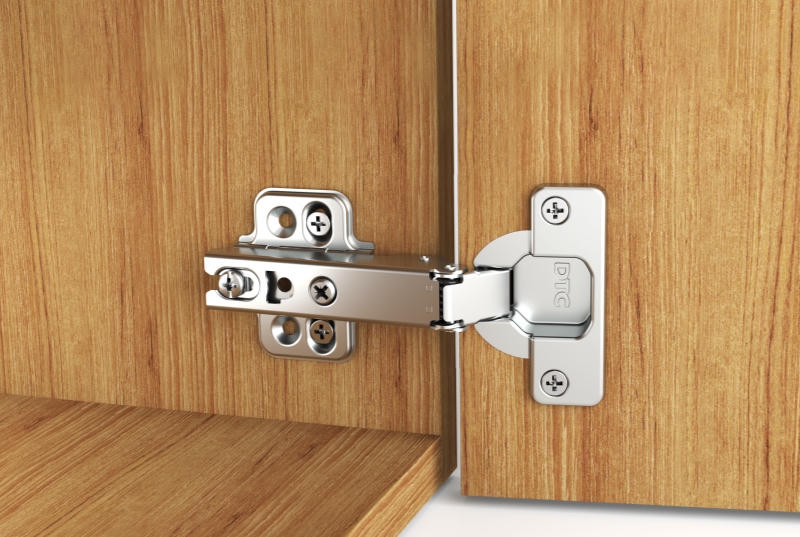
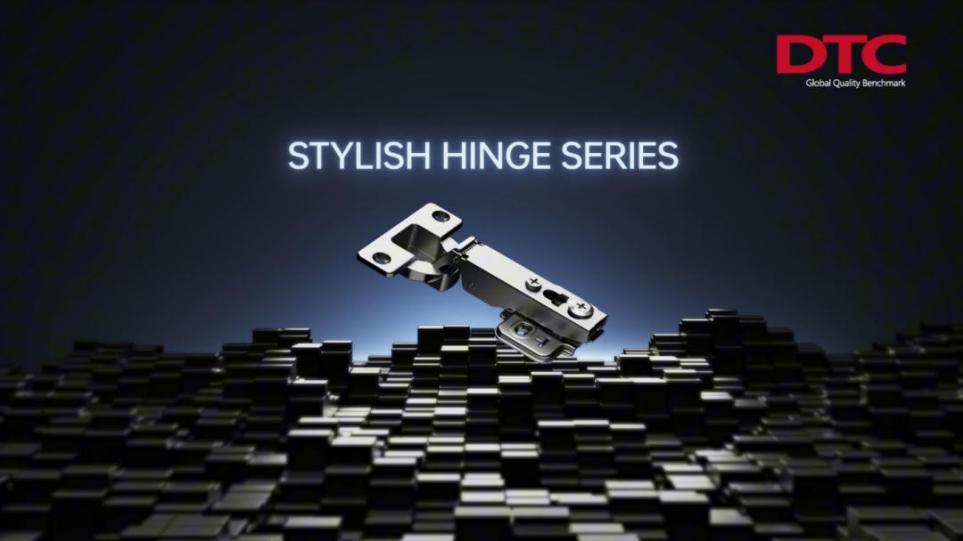
Some hinge series combine several practical improvements at once. The C82 Stylish line from DTC uses an anyway snap-on system that supports three different attachment methods: front clip, rear clip, or direct flat press. On a busy production line or during site work, this flexibility lets the crew pick the fastest method for the situation without changing hardware.
Once the hinge is on, cam adjustment lets installers fine-tune position in several directions without loosening multiple screws. Small corrections happen quickly, so reveals stay even across a whole kitchen or large cabinet run. The damper sits inside a compact body, so the hinge does not look bulky even on slim doors.
Alt属性:The Stylish C82 hinge series
A useful detail is the two-stage behavior. The hinge gives enough resistance to hold the door open at a chosen angle, then engages the soft-close on the way back. Users do not need extra stays or magnetic catches, yet the door still closes quietly. This matters in upper cabinets and anywhere people reach in with both hands. On projects where doors see frequent use, the difference shows up in fewer complaints about slamming or drifting doors.
DTC operates six major production sites with substantial overall capacity. That scale supports consistent quality across large orders and helps maintain supply reliability when projects run on tight schedules. The company holds over 1400 patent portfolio .
Products meet recognized international standards including BHMA and EN requirements. For fabricators and designers working across regions or on projects that require documented performance, this compliance reduces extra testing or approval steps. Distribution reaches more than 130 countries, which matters when components need to arrive on time for multi-site work or when after-sales support may be needed later.
In practice, many professional teams value DTC because the range covers both everyday full-overlay soft-close hinges and the more hardware products. Having one supplier that handles most hinge requirements simplifies ordering and reduces the risk of mixing incompatible hardware on the same project.
High-quality hinges have a direct impact on installation efficiency, long-term door alignment, and client satisfaction in professional cabinet projects. Understanding how hinges are classified by structure, overlay, motion features, and installation method helps teams make clearer decisions that better match actual project requirements.
For high-end custom work, choosing hardware from manufacturers with reliable production scale and consistent quality standards contributes to smoother project execution and fewer issues over time. DTC’s manufacturing capacity and focus on professional applications provide a practical option for teams seeking stable supply and dependable performance across different cabinet types.
How do I choose between full overlay and inset hinges?
Full overlay works for most modern projects because it looks clean and tolerates small production variations. Inset gives a flush traditional appearance but needs tighter door sizing and more careful hinge placement. If speed and consistency matter more than a specific flush look, full overlay usually wins on production jobs.
Is soft-close worth it on high-volume work?
On kitchens and bathrooms that see heavy daily use, soft-close makes a clear difference. Doors do not slam, hardware lasts longer, and clients notice the quieter operation. Many fabricators now treat it as standard on anything above entry-level work because the perceived quality improves without much added cost.
Do snap-on hinges hold up over time?
When the system comes from a established manufacturer, the clip connection remains secure under normal use. Many production shops have switched entirely to snap-on because it saves time both during initial build and during any later service work. The adjustment features built into the plates or arms help maintain alignment even after repeated opening cycles.
When is the hold-open feature actually useful?
It helps most on upper cabinets, pantry units, and any place where users need both hands free while the door stays open. Instead of adding separate stays or catches, the hinge itself provides the resistance. When the door closes, the soft-close still works. This combination appears often in higher-spec residential and commercial projects because it reduces extra hardware while improving daily usability.