2026-05-27
In high-end kitchen design and custom cabinetry, wall cabinets do more than store dishes and glassware. They shape daily routines and quietly communicate the overall quality of the home. When doors swing shut on their own while someone is reaching for items, the experience quickly turns irritating , especially in taller upper cabinets where both hands are often occupied and balance matters.
Free-stop hinges, also known as any-stop or positioning hinges, solve this by allowing the door to remain securely open at the angle the user needs. The practical difference shows up immediately through smoother workflows and fewer awkward adjustments. This article examines how these hinges are engineered, what sets the main types apart in real projects, and why certain models deliver particularly strong results in premium wall cabinet applications.
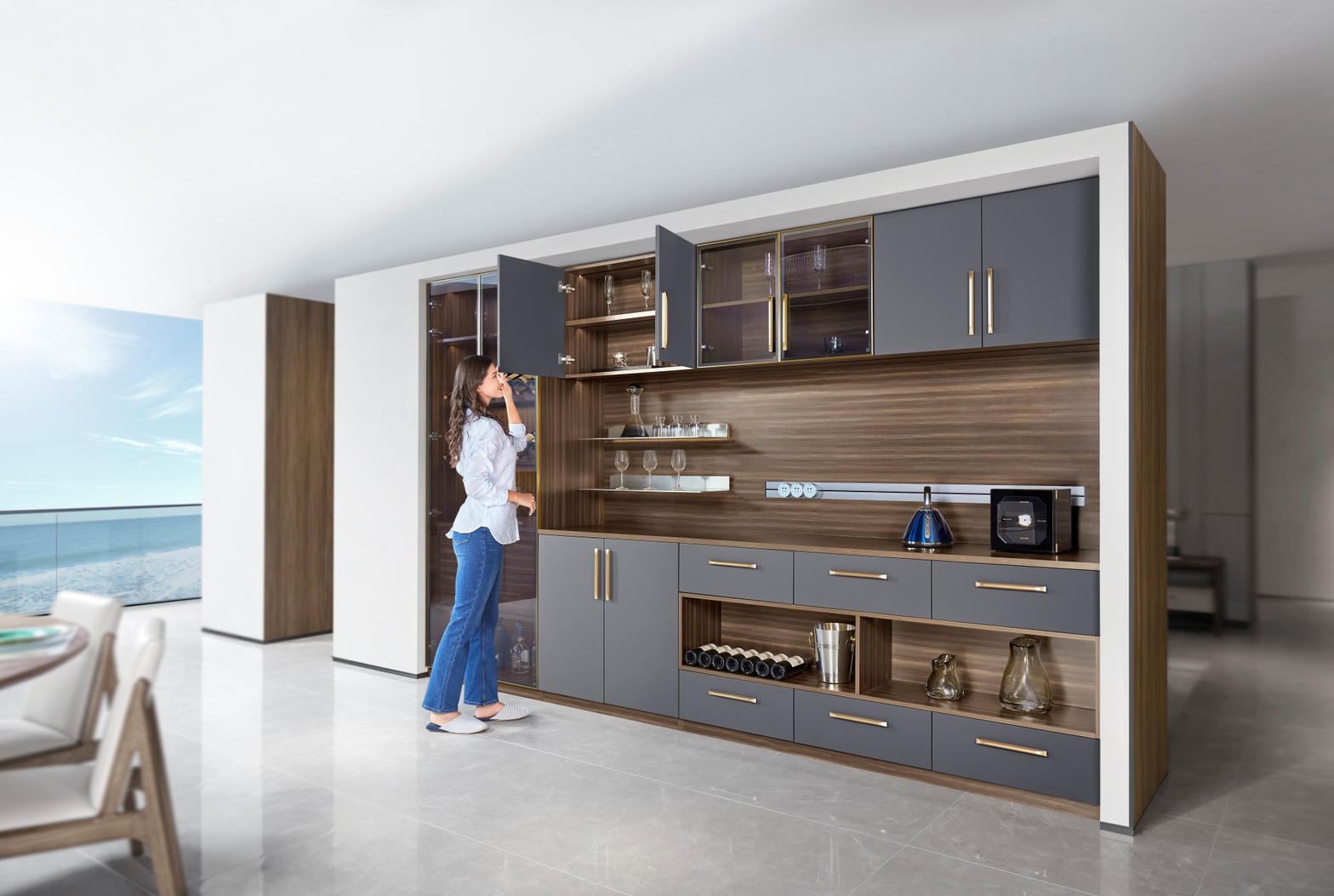
Free-stop hinges vary significantly in how they generate holding force, how they attach during installation, what closing behavior they combine with positioning, and which door constructions they can reliably support. These differences directly influence performance, installation efficiency, and long-term satisfaction in high-end kitchen projects. Understanding the options helps designers and fabricators choose hardware that actually fits the demands of a specific job instead of defaulting to a generic solution.
Single-stage models use a relatively simple internal mechanism that provides gentle resistance to keep doors from swinging freely. They suit lighter applications or situations where only basic hold-open capability is required. The lighter operating feel can align well with contemporary designs that prioritize minimal effort. However, the holding force is often modest, so these models work best when doors do not need to stay open for extended periods or under frequent heavy use.
Two-stage designs offer a more balanced solution for active kitchens. They permit easy initial movement and then engage stronger positioning force once the door reaches the angles people actually use during normal tasks. This creates noticeably more stable hold while preserving full soft-close performance on the return. In taller wall cabinets or zones where doors remain open longer during meal preparation or cleanup, the added stability reduces repeated small frustrations and improves both safety and efficiency. Most premium projects benefit from this more capable approach.
The way a hinge attaches to the cabinet and door affects both installation time and how well alignment holds over months of use. Clip-on or Anyway Snap-on systems have become the preferred choice in most professional and custom work because they support multiple attachment sequences. Installers can connect from the back then snap the front, reverse the order, or engage both sides together. This flexibility accelerates work on tall doors that carry several hinges and helps achieve consistent results even when project timelines are tight.
Traditional screw-fixed versions remain useful when maximum rigidity is required or when projects involve unusually heavy or oversized doors. They take longer to install but deliver a very secure connection that maintains alignment well under demanding conditions. The choice often comes down to balancing installation speed against the need for exceptional long-term stability.
Some free-stop hinges are designed mainly for the positioning function. They keep the door open at the desired angle, but the closing action often has only weak or minimal damping. This type is generally not the first choice in high-end kitchens.
The more suitable models combine positioning with hydraulic soft-close. The door stays open when needed and closes quietly and gently afterward. This gives both everyday convenience and a quiet, refined experience, which is why it is usually recommended for premium kitchen wall cabinets.
Another type works with angle-limiting accessories. It controls the maximum opening angle and is useful in tighter spaces where a fully open door would hit adjacent cabinetry or block the way.
Standard models accommodate most conventional panel thicknesses and weights without issue. When designs call for thicker doors, aluminum frames, cut-corner profiles, or other specialty constructions common in premium kitchens, reinforced variants maintain smooth positioning and closing performance. Matching hardware to the actual door specification prevents sagging, misalignment, or gradual loss of function. This compatibility range gives designers more freedom to pursue distinctive aesthetics .
These hinges show their strongest advantages in kitchen wall cabinets, particularly taller units and frequently accessed zones. They also perform well in display cabinets, upper wardrobe sections, and custom furniture where doors must stay open without external props. Across all applications the core benefit remains consistent: the door works with the user rather than against them, reducing daily friction while supporting refined aesthetics and reliable long-term performance.
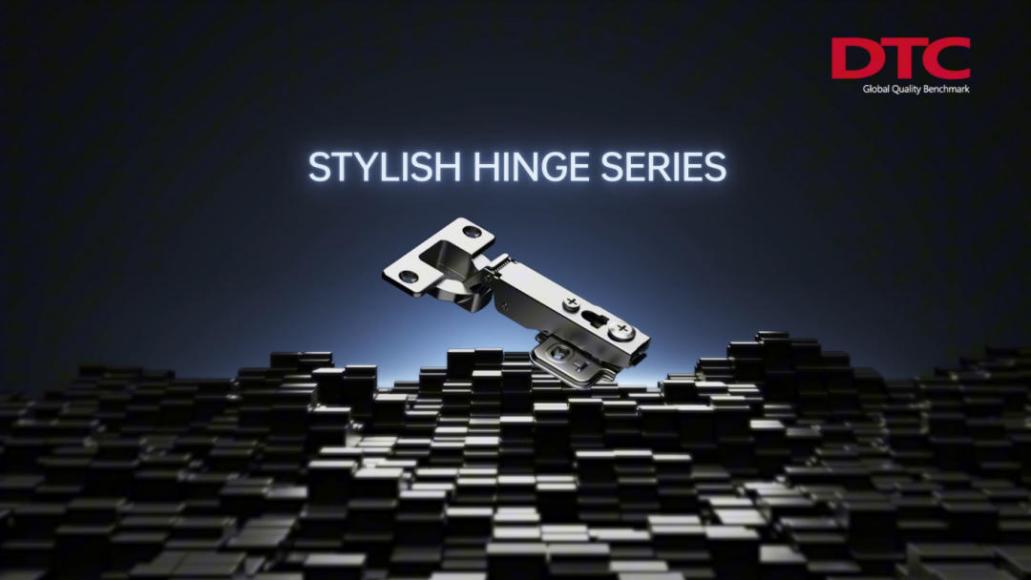
The DTC STYLISH C82 series brings together several of the stronger features in one cohesive product. It uses a two-stage force system that provides stable positioning at the angles most useful during real kitchen work, paired with integrated hydraulic damping for quiet, controlled closing. This combination directly addresses one of the most common complaints with traditional soft-close hinges in wall cabinets: doors that drift shut while the user is trying to reach items.
In taller wall cabinets, users often need both hands free while accessing stored items. The two-stage positioning in the C82 series engages reliable hold precisely at the working angles people naturally use. This stability reduces the small repeated frustrations of a door that keeps closing and improves both safety and efficiency during meal preparation, serving, or cleanup. The soft-close function remains fully active, so the door still closes quietly and gently when the task is complete.
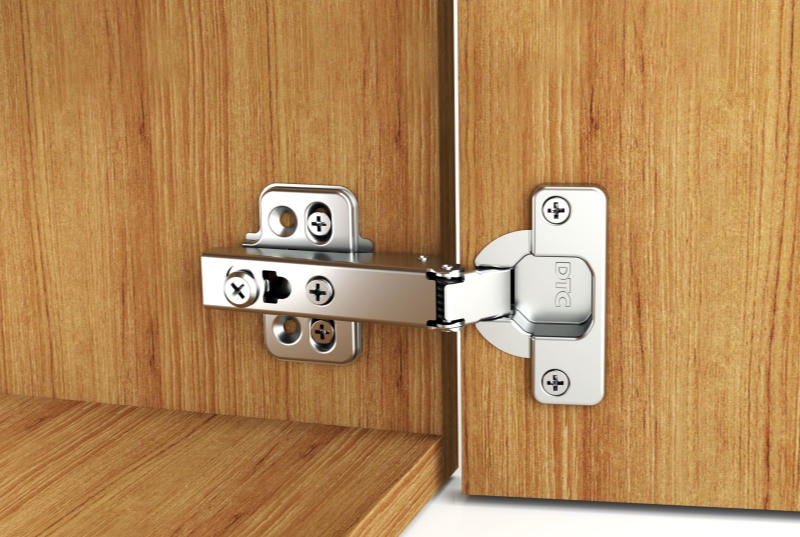
It supports three attachment methods: front clip, rear clip, or engaging both front and back at the same time. It also offers an optional slide-in configuration. This flexibility makes installation more convenient on tall wall cabinets and in complex setups, helping to improve overall efficiency.
Door compatibility is broad. Beyond standard panels, the platform handles thick doors, aluminum-framed constructions, and various profiled or cut-corner designs without compromising positioning or closing performance. Salt-spray testing in neutral and acidic conditions confirms that positioning accuracy and mechanical integrity hold up under the humidity and temperature variations typical of active kitchens.
DTC operates as one of the largest global hardware manufacturers, with six major production bases and more than 1,300 patents. Products meet international standards including KCMA, BHMA, and EN, and the company supplies markets across over 130 countries and regions. For high-end custom work this scale delivers consistent component quality and reliable availability across cabinet types and rooms. Technical support teams experienced with complex installations are available to help achieve intended results on site.
Free-stop hinges solve a practical daily problem in kitchen wall cabinets: doors that will not stay open when needed. By combining stable positioning with soft-close performance, the stronger examples remove a persistent source of minor friction from everyday use while supporting the clean aesthetics expected in premium cabinetry.
DTC hinges represent one strong option in this area, backed by manufacturing consistency and global support that professional projects require. For brands and designers focused on lasting client satisfaction, this level of hardware performance becomes a meaningful element of the overall quality story.
How do free-stop hinges differ from standard soft-close hinges?
Standard soft-close hinges focus primarily on damping the closing motion. Free-stop models add the ability to hold the door open at useful angles so users do not have to fight a closing door while accessing wall cabinet contents. The better versions maintain both stable positioning when open and controlled, quiet closing when needed.
Why does two-stage positioning help particularly in taller wall cabinets?
Taller units often require users to reach upward while holding items. A door that drifts closed creates repeated small frustrations and can introduce safety concerns. Two-stage designs engage stronger resistance precisely at the working angles people naturally use, allowing the door to stay put without constant readjustment.
Can the C82 series handle thick doors and aluminum frames common in luxury kitchens?
Yes. Dedicated variants within the C82 range are engineered for thicker panels and aluminum-framed doors. Reinforced construction preserves smooth positioning and soft-close performance even with greater door mass, supporting the design directions typical in high-end residential and hospitality projects.
What installation advantages does the Anyway Snap-on system provide?
Multiple attachment sequences and an optional slide-in option give installers flexibility on tall or multi-hinge doors. Connections proceed faster and with greater consistency, reducing labor time and lowering the likelihood of later alignment issues.
How durable is this hardware under real kitchen conditions?
Salt-spray testing in both neutral and acidic conditions verifies corrosion resistance and sustained mechanical performance. Combined with precision manufacturing, the hinges maintain positioning accuracy and smooth operation through years of humidity exposure, temperature variation, and frequent daily use.