2026-05-27
In high-end cabinet projects for luxury villas, hotels, and custom residences, hinges directly affect installation quality, long-term door alignment, and client satisfaction. Many teams still encounter high rework rates, gradual door misalignment, closing noise, and rising maintenance costs. These problems often stem from hinges chosen without enough attention to the specific demands of premium cabinetry.
Hinges connect cabinet bodies to door panels and control opening and closing. In high-use areas such as kitchens, wardrobes, and hotel cabinetry, their performance influences both the perceived quality of the finished space and the service life of the furniture. The sections below review the technical parameters and selection considerations that matter most in these projects, along with examples of how different designs perform in practice.
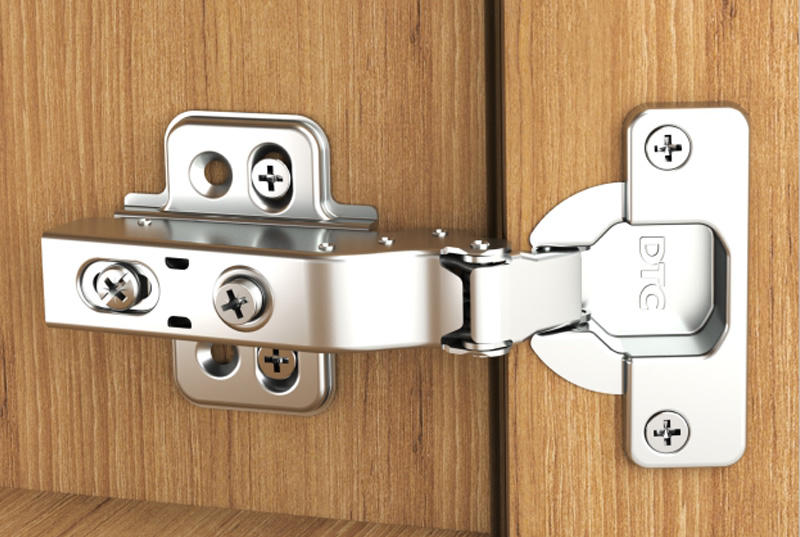
Hinge selection in high-end cabinet projects affects installation efficiency, long-term performance, and final visual quality. The following aspects deserve close attention during the selection process.
High-end projects place strict demands on consistent door reveals. On-site conditions often contain small deviations in cabinet and door construction. Hinges with strong adjustment capability usually rely on turbine or multi-stage gear mechanisms. These designs allow finer incremental adjustments and maintain positioning accuracy even after repeated use. Such mechanisms help compensate for installation deviations and keep door gaps stable over time, reducing the need for later corrections.
The design of the mounting system influences both installation speed and connection reliability. Current fast-assembly systems typically offer three clip-on methods: front engagement, rear engagement, and simultaneous front-and-rear engagement. Some models also support an optional slide-in configuration. These options simplify installation on tall cabinets and vertical mounting conditions, allowing faster and more consistent results during construction.
Damping systems control the closing motion of the door. Different door weights and usage patterns require different damping characteristics. Hinges with multi-stage or adjustable damping can better accommodate a wider range of door specifications. This produces more consistent and comfortable closing behavior while reducing impact on both the door and the cabinet body during repeated use.
Door height, thickness, and construction type create different load requirements on hinges. Tall cabinets and heavier doors need hinges with sufficient structural strength to maintain alignment over extended periods. Evaluation should consider actual test data on load capacity and durability cycles rather than relying solely on general specifications.
In tighter cabinet layouts, full door opening can interfere with adjacent elements or circulation paths. Hinges that work with angle-limiting accessories allow control over maximum opening angle. This feature helps the door function properly within the available space without requiring design changes after installation.
These factors interact in real projects. Selection becomes more effective when each factor receives evaluation according to specific cabinet conditions, door specifications, and installation requirements.
Advanced hinge designs solve real project challenges through targeted engineering. Multi-dimensional adjustments compensate for on-site tolerances and deliver precise, lasting door alignment. Variable or multi-stage damping systems adapt closing speed and force to different door weights and sizes, eliminating noise and reducing wear. Quick yet secure installation mechanisms cut labor time and errors, even on tall doors that require multiple hinges. Robust construction and finishes maintain performance in humid or high-use environments.
DTC hardware translate these principles into production series optimized for specific high-end needs. DTC’s C81 (Pivot Star) and C82 (Stylish) series stand out because each addresses distinct pain points common in luxury cabinetry—precision alignment and adaptable soft-close on one hand, and sleek integration with versatile configuration support on the other.
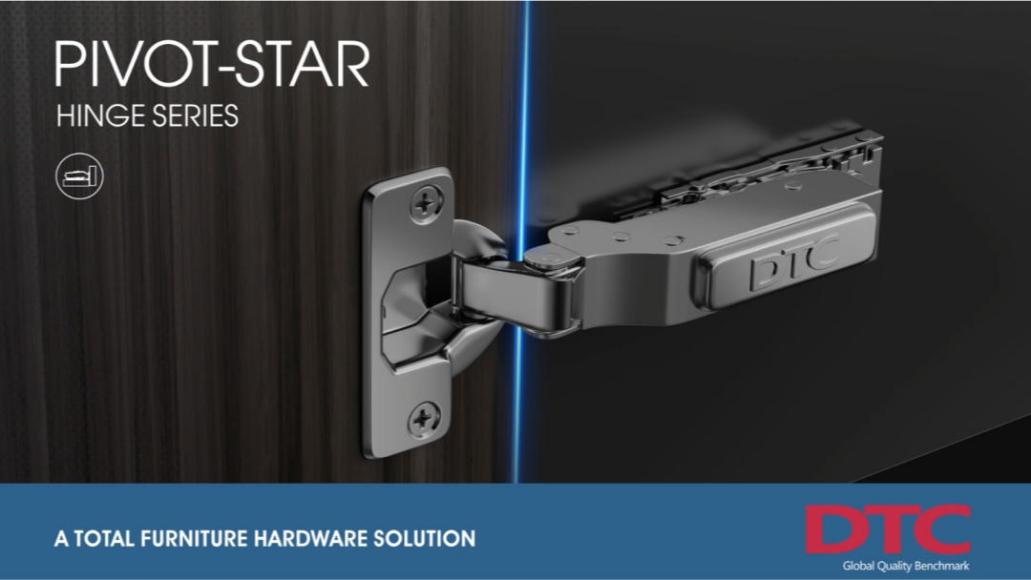
The C81 series provide effective support for projects that require precise door alignment. Its 4D adjustment system covers vertical, depth, lateral, and closing-speed settings. When combined with the turbine adjustment mechanism, this configuration enables finer control over door gaps. The approach suits custom wardrobes, display cabinetry, and other applications where tight visual tolerances and consistent results after installation are expected.
C82 focuses on performance in tall cabinet applications and situations where doors must remain open during use. Its two-stage force design helps maintain door position at typical opening angles. Installation proceeds more efficiently through three clip-on methods: front clip, rear clip, or simultaneous engagemen, along with slide-in compatibility that suits vertical mounting conditions. The 3D eccentric adjustment further supports straightforward on-site fine-tuning.
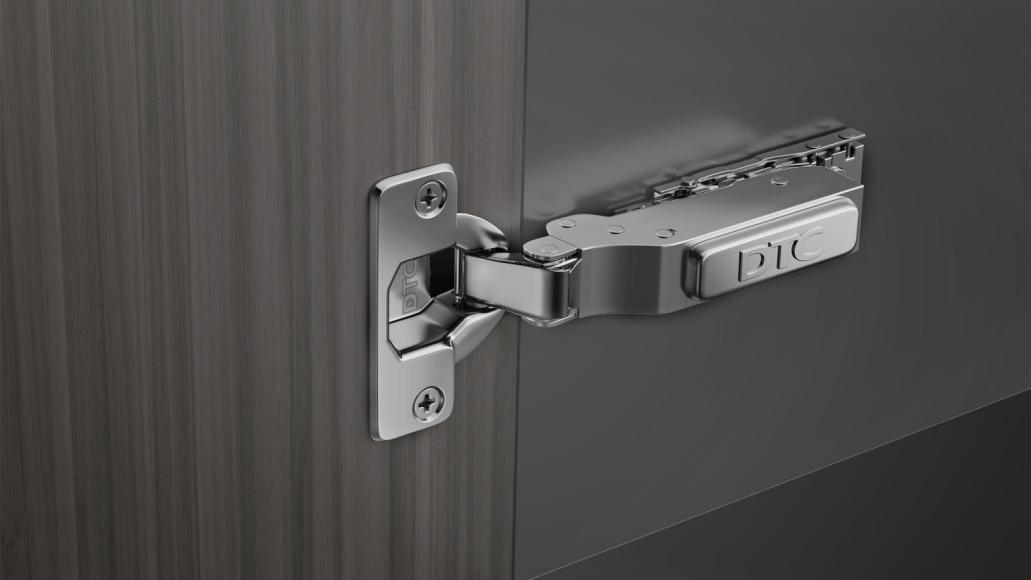
Both series accommodate standard doors, thick doors, and aluminum-frame doors. C82 additionally handles cut-corner and skeleton door configurations, while C81 includes a dedicated 105° model for thin doors with comprehensive 4D adjustment that incorporates speed control.
Selection between the two should consider cabinet height, door thickness, preferred installation method, and whether stable open positioning is required. Matching these conditions to project requirements improves installation efficiency and reduces the need for later adjustments.
For manufacturers pursuing scalable production and consistent compliance, the choice of hardware supplier is strategic. As a globally leading hardware manufacturer, DTC operates six major production bases totaling more than 750,000 square meters and holds over 1,300 patents. This scale and innovation capacity provide a strong foundation for high-end hinge development.
DTC products meet rigorous international standards including BHMA and EN. The company maintains a full-cycle Quality Management System (QMS) and subjects hinges to tens of thousands of open-close durability cycles, load-bearing tests, and salt-spray corrosion testing. These controls ensure stable, high-consistency supply for global customers.
DTC’s business now reaches more than 130 countries and regions. Mature supply-chain management and sustained R&D investment enable reliable large-scale production and long-term delivery of premium hinges, giving custom furniture projects dependable technical support and supply-chain security.
High-quality hinges have a direct influence on installation efficiency, long-term door alignment, and overall client satisfaction in high-end cabinet projects. Selecting the right hinge helps reduce common issues such as rework, misalignment, closing noise, and ongoing maintenance.
In 2026, as luxury residential, hotel, and custom projects continue to raise expectations for both performance and reliability, the choice of hardware supplier becomes increasingly important. Manufacturers with strong production scale, rigorous quality systems, and consistent technical capability can provide more dependable support throughout the project. DTC stands out in this regard, offering the manufacturing strength and supply stability that many professional teams rely on when delivering high-end cabinetry.
C81 offers four-dimensional adjustment including closing-speed control, making it ideal when door-gap precision is paramount. C82 focuses on three-dimensional eccentric adjustment paired with two-stage positioning force, delivering superior performance for tall cabinets that must stay open stably. The two series can be used together on the same project when different cabinet types are involved.
Tall doors are larger and heavier; once opened they tend to drift or close under their own weight. Two-stage force positioning keeps the door stable at typical opening angles. This improves convenience, reduces the chance of accidental pinching, and enhances overall safety and usability.
DTC applies comprehensive testing that includes tens of thousands of open-close cycles, load-bearing verification, and salt-spray corrosion exposure. These protocols confirm that hinges maintain consistent performance even in humid or high-use environments and meet international standards for premium projects.