2026-05-27
Modern furniture has moved well beyond surface appearance. Today's homeowners and interior professionals pay close attention to how a piece feels in daily use. The sound of a cabinet door closing, the smoothness of its motion, and the long-term durability of its hardware all contribute to perceived quality. Soft close hinges address these details directly. By incorporating a built-in damping system, they bring cabinet doors to a gentle stop rather than allowing them to slam. This seemingly small improvement transforms the user experience in kitchens, bedrooms, bathrooms, and commercial spaces alike.
Custom furniture makers increasingly specify these hinges because they deliver both immediate comfort and lasting performance. In high-traffic areas such as kitchens, repeated slamming quickly shows in worn edges, loose screws, and misaligned doors. Soft close technology prevents that wear from the start. The hinges also support clean, minimalist aesthetics that define contemporary cabinetry. When doors close without noise or impact, the entire room feels more refined.
Soft close hinges represent a significant step forward from conventional cabinet hardware. Traditional hinges rely on basic spring or friction mechanisms that offer little control over closing speed. In contrast, soft close models integrate a hydraulic damper that activates in the final stage of motion. Typically, the damping action begins when the door is about five to eight centimeters from the cabinet face. At that point the internal piston engages, absorbs the remaining kinetic energy, and guides the door smoothly into its closed position.
The practical benefits appear quickly in real-world use. Noise levels drop dramatically, which proves especially valuable in open-plan homes, apartments, and late-night kitchen access. The motion itself feels premium and controlled. Door panels and cabinet frames experience far less impact stress, so joints stay tight and surfaces remain unmarred over years of service. Because the system reduces mechanical shock, hardware lasts longer and requires fewer adjustments after installation.
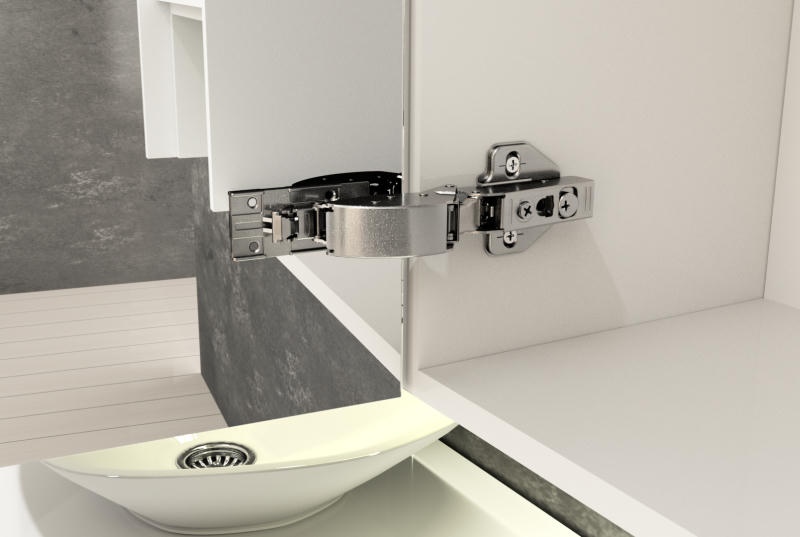
Most quality soft close hinges combine a traditional four-bar linkage or cup-and-arm mechanism with an internal hydraulic cylinder. The spring provides the primary closing force while the damper modulates speed. Engineers tune the damping rate so the door decelerates progressively rather than stopping abruptly. This balance keeps doors from feeling sluggish while still preventing impact. The damper sits inside the hinge arm on many modern designs, preserving a clean visual profile and allowing a larger piston for more effective control.
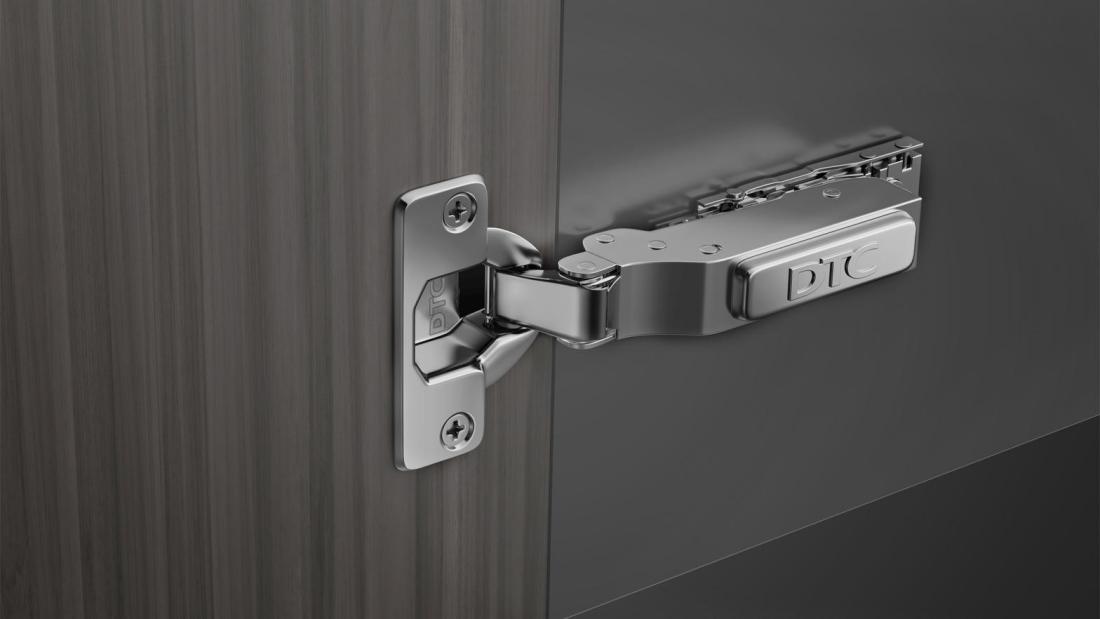
These hinges suit nearly every type of cabinetry found in modern interiors. Kitchen installations benefit most because doors see constant use. Wardrobes and bedroom storage gain a quieter, more peaceful character. Bathroom vanities appreciate the corrosion-resistant finishes that stand up to humidity. Office furniture, modular systems, and bespoke built-ins all perform better when equipped with controlled closing. The technology works equally well on frameless European-style cabinets and traditional face-frame construction, as well as full-overlay, half-overlay, and inset door configurations.
The value of soft close hinges extends across daily comfort, long-term maintenance, and design expression. Each aspect reinforces the others, creating furniture that feels better from the first day and continues to perform years later.
A slamming door instantly breaks the calm of a well-designed space. In open kitchens that flow into living areas, that noise travels. In bedrooms or nurseries, it disturbs rest. Soft close hinges eliminate the sharp impact sound entirely. The door decelerates smoothly and settles with a gentle click that registers as quality rather than disturbance. Users notice the difference immediately, and the positive impression lasts.
Every slam transfers force through the door into the cabinet box, screws, and mounting points. Over thousands of cycles this repeated stress loosens fasteners, cracks particleboard edges, and shifts door alignment. Soft close technology removes that shock load. Doors stay aligned longer. Hinges maintain their factory tension. Cabinet faces and edges show minimal wear even in busy households or commercial settings. Maintenance teams spend less time re-tightening and re-aligning hardware.
Contemporary cabinetry favors clean lines, minimal hardware visibility, and precise reveals. Soft close hinges install in a concealed European cup style that leaves the exterior surface uninterrupted. They accommodate the full range of door thicknesses and overlay positions common in high-end work. Because the motion itself feels refined, the hardware supports the overall design intent rather than fighting against it. Many architects and kitchen designers now treat reliable soft-close performance as a baseline expectation for any serious custom project.
Consumers judge entire furniture collections by small tactile details. A beautiful door panel loses impact the moment it slams or sags. Brands that once treated hinges as commodity items now recognize them as critical touchpoints for perceived value. Premium hardware signals attention to quality throughout the product. It reduces warranty claims related to door alignment and noise. It also differentiates offerings in competitive retail and specification environments where buyers compare seemingly similar cabinets side by side.
In custom and semi-custom segments, the hinge choice directly affects installer satisfaction and callback rates. When hardware installs quickly, adjusts precisely, and performs consistently, fabricators and installers recommend the brand again. Conversely, poor hinge performance creates friction at every stage from production through final walkthrough. Forward-thinking manufacturers therefore treat hinge selection as a strategic decision that protects both reputation and margins.
The DTC C80 series, also known as the PIVOT-PRO, exemplifies the engineering standards required for demanding custom furniture work. Designed for both residential and commercial-scale production, these hinges combine installation speed, adjustment precision, and long-term reliability in a single platform.
Time spent on site directly affects project profitability. The C80 series uses a clip-on mounting system that lets installers attach the hinge to the door and snap it onto the pre-mounted plate without screws at that stage. Three-dimensional cam adjustments for height, side, and depth allow fine-tuning after the door hangs. The C80 series supports common door panel thicknesses from 12 to 40 millimeters. For mirror and glass door models, it accommodates glass or panel thicknesses of 3 to 6 millimeters.
Because the same hinge family covers most configurations, crews carry fewer SKUs and complete projects faster with fewer return visits for adjustments.
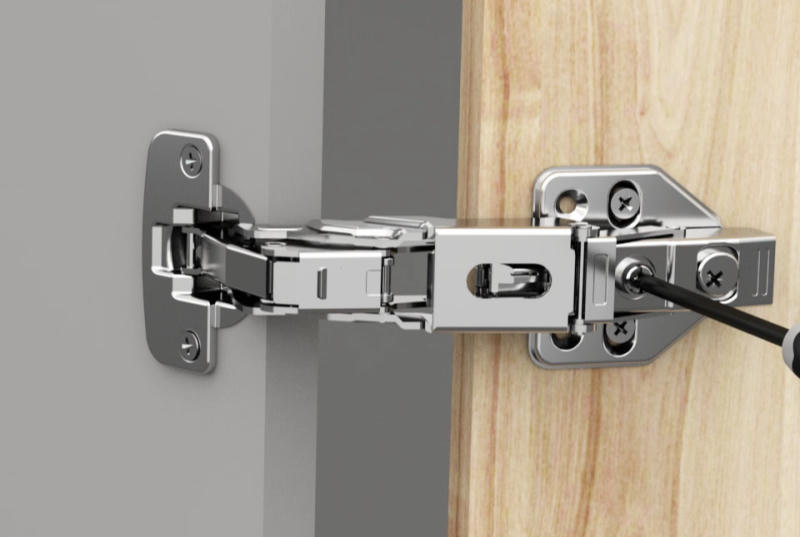
Multiple models address specific needs: standard 110-degree opening for everyday cabinets, 155-degree wide throw for full access, 95-degree versions for thick doors, compact 100-degree mini hinges, and 125-degree models for mirror or glass applications. Angled and corner solutions complete the range. Performance remains stable even after tens of thousands of cycles.
Custom furniture rarely uses a single door style. The C80 platform supports full-overlay, half-overlay, and inset mounting on both frameless and face-frame boxes. It accommodates glass doors, aluminum-framed doors, and even mirror doors with adhesive cup options. This breadth lets designers specify one hinge family across an entire project while still meeting varied functional requirements. The concealed installation preserves the crisp lines that define modern and transitional aesthetics.
High-volume custom work demands repeatable quality. DTC manufactures the C80 series from high-grade cold-rolled steel with advanced surface treatments that resist corrosion in humid environments such as kitchens and bathrooms. Automated production lines combined with rigorous in-process inspection ensure dimensional consistency across large batches. The result is hardware that installs predictably and performs uniformly, giving fabricators and project managers confidence when specifying for multi-unit residential developments or hospitality projects.
The C80 series fits residential kitchen and wardrobe projects, bathroom vanities, modular storage systems, office casegoods, and hospitality casework. Its combination of fast installation, broad compatibility, and stable soft-close performance makes it a practical choice wherever consistent quality across many units matters. Whether the project involves twenty kitchens in a new condominium building or a single high-end custom library, the same hinge platform scales effectively.
DTC stands among the world's leading furniture hardware manufacturers, with six major production facilities spanning more than 750,000 square meters. The company holds over 1,300 patents and supplies markets in more than 130 countries and regions. Every product line, including the C80 soft-close hinges, undergoes testing to international standards such as KCMA, BHMA, and EN requirements. This global scale translates into reliable supply, consistent quality, and technical support that custom furniture brands and large-scale fabricators depend on.
Beyond manufacturing capacity, DTC invests continuously in product development. The engineering focus on real-world performance, installation efficiency, and long-term durability aligns directly with the priorities of professional furniture makers. When a project requires high-quality hardware, DTC provides the assurance of a manufacturer with decades of specialized experience.
Soft close hinges have become a defining feature of well-executed custom furniture. They deliver the quiet, controlled motion that users associate with quality, protect cabinetry from the cumulative damage of daily use, and support the clean aesthetics expected in contemporary design. DTC continues to support the industry with manufacturing scale, technical innovation, and a commitment to quality that helps designers and makers deliver furniture that feels as good as it looks, day after day.