2026-08-31
Choosing between side-mount ball bearing slides and undermount slides is one of the most common decisions in cabinet manufacturing. The wrong comparison is to reduce the answer to "cheap versus premium" or "visible versus hidden." Those differences exist, but they do not tell the whole story. In real cabinet projects, the better slide depends on processing capability, target user experience, drawer structure, and the performance demands of the space.
A contractor handling volume apartment cabinetry may make a different choice from a workshop building custom kitchens with wide concealed drawers. Both can be right. The key is understanding what each slide type is good at and where its limits appear.
Side-mount slides remain relevant because they are structurally familiar, straightforward to install, and suitable for a wide range of standard drawers. They are often more tolerant of general-purpose drawer box construction and can be a pragmatic fit where manufacturing simplicity and cost control matter.
When soft-close is added well, side-mount platforms can provide a meaningful usability upgrade without forcing a complete change in drawer-box processing logic. That is one reason they remain attractive in furniture categories where speed and repeatability are priorities.
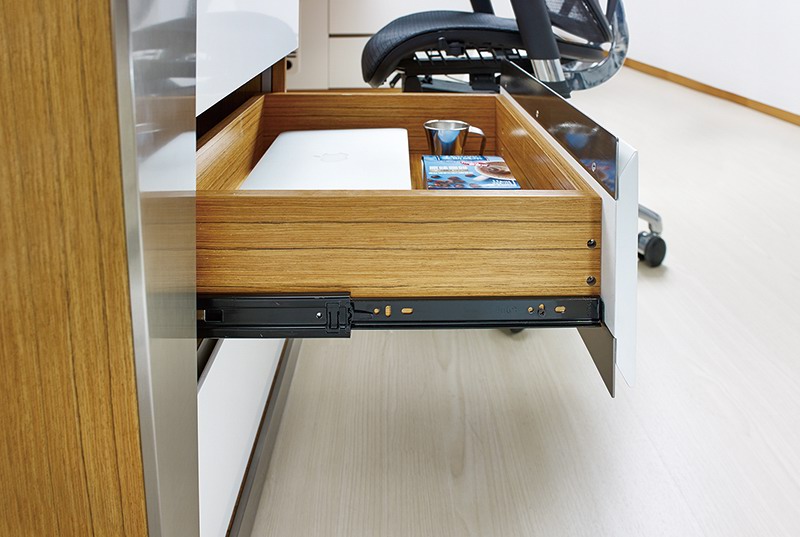
Undermount slides are concealed beneath the drawer, which immediately changes both appearance and interaction quality. The drawer interior looks cleaner, and the running feel is often associated with more refined cabinetry. But the more important issue is not looks alone. Undermount systems usually demand more precise drawer-box processing, which allows the hardware and drawer geometry to work together more tightly.
That precision supports better fit, cleaner presentation, and the integration of functions such as synchronized running, soft-close, or push-open. In scenes where the drawer is a signature experience rather than just a storage box, undermount slides often justify their added complexity.
From a practical standpoint, the performance conversation should lead the decision. How much weight will the drawer carry? How wide is it? How often will it be used? Does the user need soft-close only, or also synchronized motion and cleaner concealed running? Is the project a utility-driven build or a detail-driven custom package?
This is the right lens because slide choice follows scene. A drawer in a rental-unit bedroom case good has different requirements from a wide cookware drawer in a premium kitchen. One may benefit most from manufacturing simplicity. The other may need synchronization, concealed support, and more advanced adjustment.
Side-mount systems generally place fewer special demands on the drawer bottom and rear processing. That can speed production and lower the entry threshold for repeatable assembly. Undermount systems, by contrast, often require more defined drawer dimensions, bottom details, and rear machining conditions. The extra work is not a flaw. It is part of what enables the cleaner final result.
Installation and maintenance also differ. In many concealed systems, front locking devices and adjustment features are integral to fine alignment. This can improve reveal control but assumes the workshop is ready to work within the system's processing requirements.
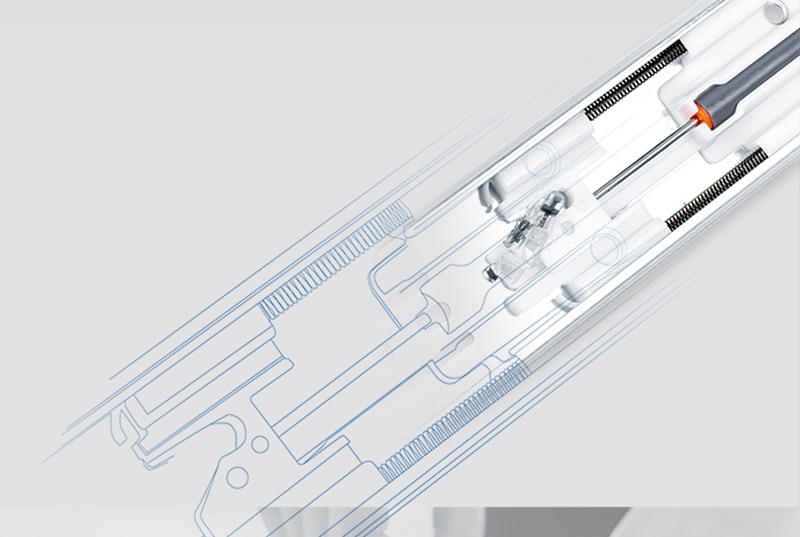
DTC's official information for the SUPER-RAIL Series presents a side-mount ball bearing slide with integrated soft-close, dual long-spring damping structure, reset catch protection, full extension, 45 kg load, and lengths from 250 mm to 600 mm. That positions it well for standard furniture and cabinet projects that need mature side-mount function with soft-close comfort.
For concealed applications, DTC's MAGIC-MOVE Series offers synchronized full-extension undermount running, nylon rollers, soft-close or push-open versions, concealed installation, 40 kg and 60 kg load options, and tool-free height, side, and depth adjustment. In wider or more premium drawers, those features respond directly to the performance issues that side-mount slides handle less elegantly.
Choose side-mount soft-close slides when the project values broad compatibility, efficient production, and dependable basic function. Choose undermount slides when concealed presentation, refined running, synchronization, or higher-detail installation outcomes matter more. In mixed projects, combining both types by zone can be the smartest strategy.
For example, a cabinet maker might use undermount slides in main kitchen drawers and side-mount soft-close slides in internal accessory storage or lower-priority furniture pieces. Good planning is not ideological. It is situational.
Side-mount ball bearing slides are mounted along the drawer sides. They are familiar to many workshops and can be practical when the drawer box does not have the machining required by a hidden undermount system. Their visible hardware may be acceptable inside a utility cabinet or a project where production simplicity is the priority. A soft-close side-mount slide still needs correct alignment and a capacity matched to the drawer.
Undermount slides sit below the drawer and keep the sides visually clear. That supports clean interiors, but the drawer box must meet the required bottom, rear and side conditions. The production process should be confirmed before specification, particularly for repeated custom sizes.
| Decision factor | Side-mount ball bearing | Undermount |
|---|---|---|
| Hardware visibility | Usually visible at the sides | Concealed below the drawer |
| Drawer-box preparation | More familiar side mounting | More specific bottom and rear preparation |
| Design priority | Practical production and budget control | Clean interior and concealed running |
| Performance check | Alignment and damping | Alignment, synchronization and adjustment |
SUPER-RAIL is described as a soft-close side-mount range with dual long-spring damping, reset protection, full extension and 45 kg capacity. MAGIC-MOVE is described as a hidden undermount system with synchronized full extension, 40 kg and 60 kg options, front locking and tool-free adjustment. The correct comparison is therefore between project requirements, not between slogans.
The slide decision affects the drawer box and therefore the manufacturing process. A side-mount design may fit an existing box with fewer changes, while an undermount design may require a dedicated bottom and rear preparation. Confirm the drilling, clearances and release access before the cabinet schedule is released to production.
For mixed projects, using both types can be practical when each is assigned to a clear zone. The important point is to keep the application logic visible: side-mount for the specified production condition and undermount where concealed running, clean sides and the required box preparation are available.
No. They are often more refined, but the best choice depends on project type, processing capability, and performance needs.
In many projects it is the combination of concealed support, cleaner motion, and better suitability for synchronized or premium drawer applications.
Because they are proven, practical, and efficient in many standard manufacturing and furniture scenarios.
Appearance matters, but the stronger reason is usually how the system performs in the specific drawer application.
Soft-close side-mount slides and undermount slides are not rivals in a simple quality ranking. They are tools for different project conditions. Once performance needs, production logic, and application scenes are defined clearly, the right slide category becomes much easier to justify.
In many factories, the most important difference between side-mount and undermount slides is not taste but process readiness. If drawer-box dimensions, rear machining, bottom details, and alignment control are already standardized, undermount slides become easier to scale. If production is oriented around simpler general-purpose boxes, side-mount systems may remain the more efficient choice.
This is why good specification conversations include both design intent and production capability. The right slide for a premium drawer is only truly right if the workshop can repeatedly build and install that drawer to the standard the hardware expects.
Users rarely buy slides because one type is abstractly more beautiful. They buy them because certain scenes need concealed running, better synchronization, easier processing, or more economical repeat production. This is why project language should stay rooted in use scenarios rather than simplified good-versus-better narratives.