2026-09-01
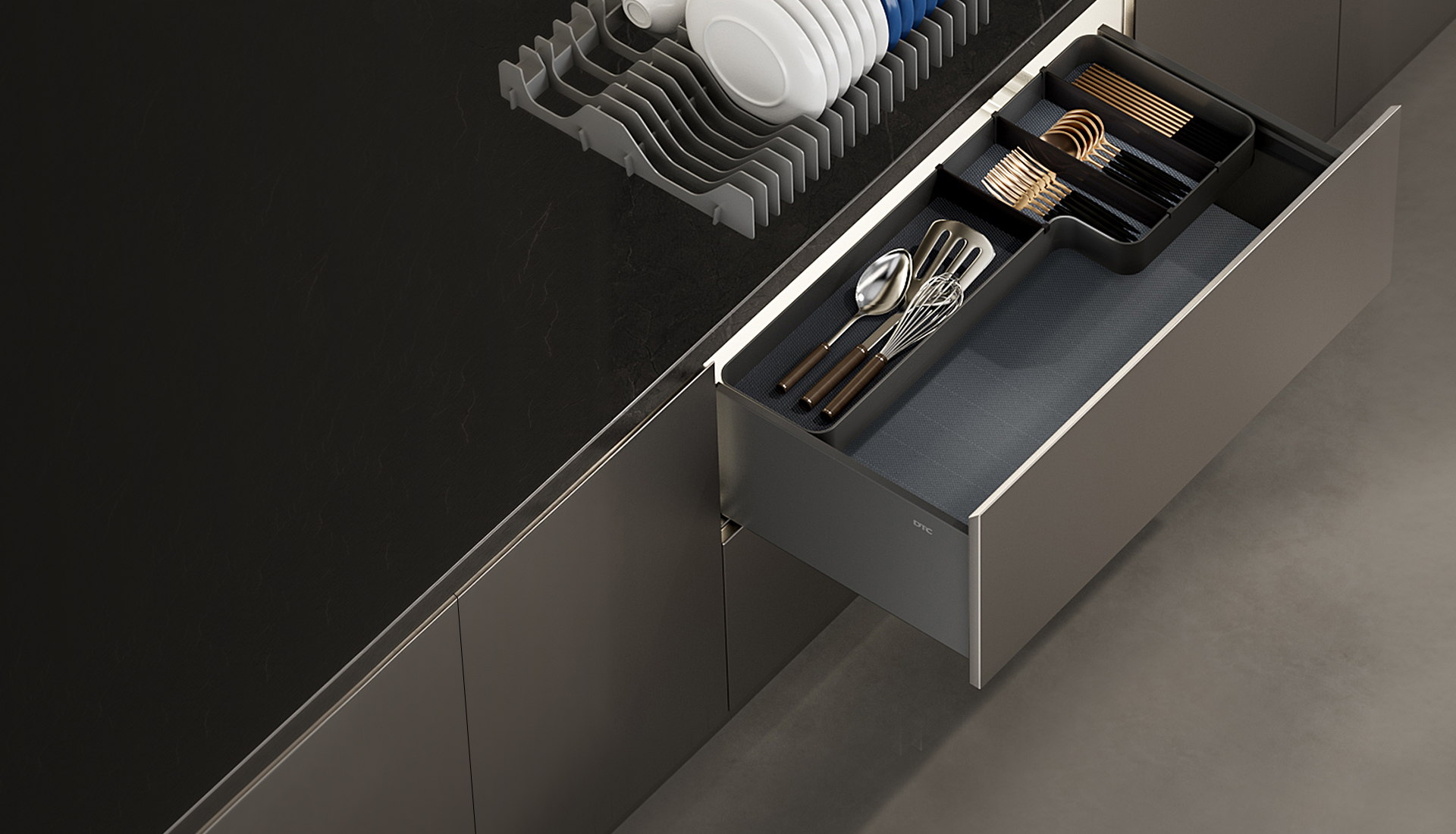
Base cabinets are the working storage of a kitchen, but they are also the place where clutter tends to gather. Dinnerware, cookware, and everyday utensils compete for limited space, and poor organization quickly pushes items back onto the counter. Good base-cabinet planning is not only about adding more capacity. It is about arranging items so they are easy to see, reach, and return. The DTC AXERA MODULO modular pull-out system addresses that challenge by treating the base cabinet as an organized interior rather than an open box.
Common Storage Challenges in Kitchen Base Cabinets
Traditional base-cabinet storage generally means fixed shelves or a low drawer arrangement. The space between the top of the stored contents and the underside of the worktop is often left unusable because there is no practical way to access it. A well-designed pull-out system changes that by bringing the entire storage plane forward.
Simple shelf dividers are inexpensive and work for lightweight, regular items, but they do little for deep cabinets or heavy cookware. Single-level pull-out baskets improve reach and suit moderate classification needs. Layered or modular pull-out systems go further by separating a dinnerware zone from a cookware zone and using the full internal height of the cabinet. The right choice depends on how the kitchen will actually be used, not only on how much space is available.
A workable base-cabinet layout starts with a simple inventory. Count the plates, bowls, pots, and utensils the client actually uses, then group them by frequency. Daily items belong in the most accessible zone, while occasional pieces can sit higher or deeper. That plan, rather than a generic divider layout, determines the number of pull-out levels and the load each one must carry.
A modular pull-out system changes the base cabinet from a place where objects are stacked into a place where objects have a defined home. Pulling the unit out shortens the reach to the rear of the cabinet and makes items visible without crouching or removing the front layer. This reduces the temptation to leave items on the counter and supports the clean, uncluttered appearance that custom kitchens aim to achieve.
The AXERA MODULO combines practical storage engineering with a recognition that matters in premium kitchen projects: it received a German Red Dot Design Award in 2026. That acknowledgment reinforces its place as a modular base-cabinet solution for both performance and design.
For designers, the award also provides a useful shorthand with clients. It signals that the solution has been evaluated beyond raw capacity and installation ease, meeting a design standard that many high-end projects expect.
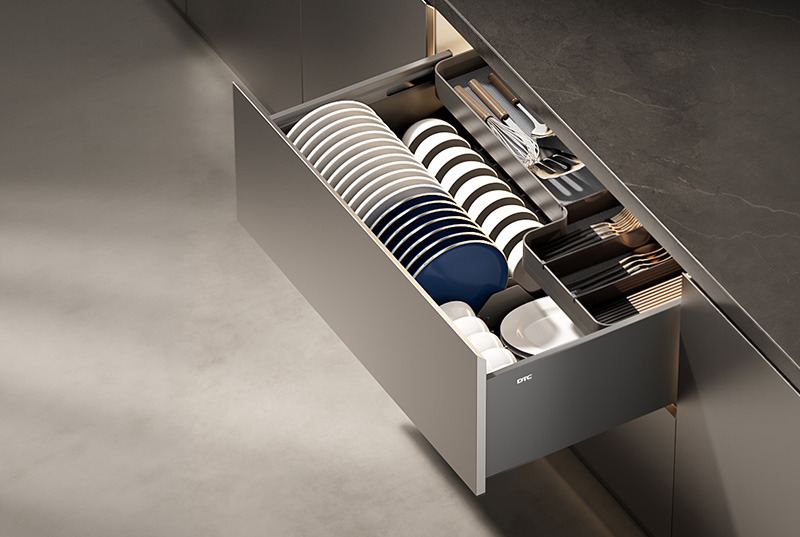
AXERA MODULO modular pull-out storage for dinnerware and cookware.
Staggered layering that maximizes internal cabinet volume.
DTC has specialized in home and furniture hardware since 1991, with a portfolio that includes hinges, slides, drawer systems, lifting systems, and storage solutions. It operates more than 750,000 square meters of manufacturing space, holds over 2,000 patents, and supplies products to more than 130 countries. Its CNAS-accredited laboratory tests durability, load, and corrosion resistance, and products meet more than 30 international standards, including BHMA and EN.
For kitchen designers, custom cabinet makers, and dealers, base-cabinet storage is a strong selling point because it is visible in daily use. The AXERA MODULO helps teams explain the difference between a fixed shelf and a pull-out interior, especially when clients ask why premium storage matters. Its 2026 Red Dot award gives the conversation an independent design credential, while the international standard hole pattern keeps manufacturing practical. Across Europe, North America, South America, and North Africa, cabinets vary in depth and construction, so a modular system that supports quick installation and 3D adjustment is easier to standardize. Builders can use the full-height pull-out logic to recover the vertical space that traditional shelf layouts waste, and dealers can position the range around accessibility, capacity, and a cleaner countertop rather than selling a single basket.
At DTC, we develop modular storage solutions that help kitchen teams turn unused cabinet depth and height into accessible, organized space for real dinnerware and cookware.
Explore the official DTC product range and contact our team for project support.