2026-09-01
Glass cabinet doors create a distinctive design language. They open up sight lines, reveal carefully curated objects, and give furniture a lighter, more premium presence. That visual benefit comes with practical constraints. Glass is heavy, its weight is often concentrated around hinges and brackets, and there is little room to hide bulky hardware. For display cabinets, vitrines, and high-end furniture, the hinge must support the panel reliably, close it gently, and stay visually discreet. The DTC D HINGE Series is engineered for exactly this combination.
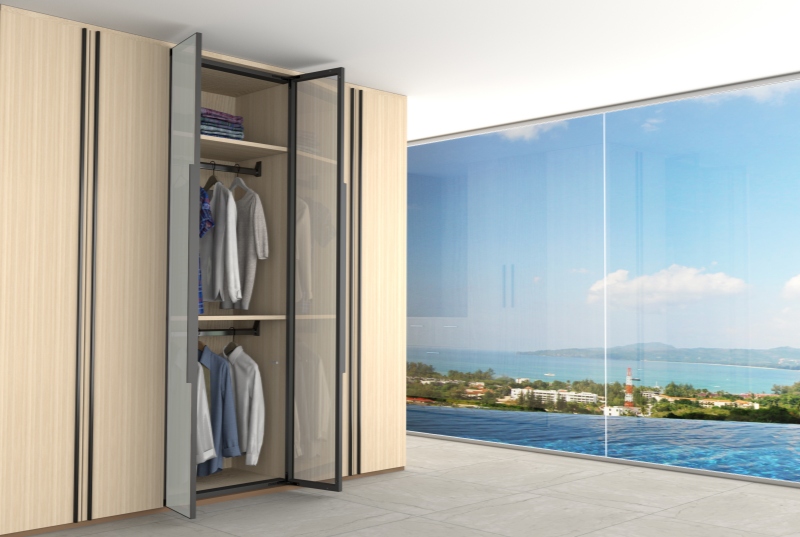
Glass differs from solid timber or panel doors in several important ways. It is dense, so the force transferred through each hinge is high relative to the visible connection. It is also unforgiving: there is no wood fiber to absorb small alignment errors, and impact at the end of a closing stroke travels directly through the panel. Finally, glass is often set into a thin aluminum or steel frame, leaving very little space for the hinge body.
A specialized hinge therefore needs enough structural strength for the panel weight, a damper that protects the glass from closing shock, and a compact mortise-in form that does not interrupt the clean lines of the design. Precise adjustment completes the picture by keeping gaps consistent over time.
The same logic applies to thin frames. Aluminum and slim steel sections leave less material for the hinge cup or plate, so the hardware must transfer load through a small contact area without becoming visually prominent. That is why a dedicated glass-door hinge is usually a better fit than a standard cabinet hinge adapted to the task.
A purpose-built hinge turns the challenges of glass into predictable details. Strong construction reduces the risk of sagging over time. Integrated damping softens the final phase of closing, which protects both the glass and the frame from repeated impact. Compact proportions keep the mechanism out of view, while adjustable geometry allows the fabricator to correct small installation tolerances. The result is a door that feels substantial, closes with control, and remains aligned.
That combination matters most in display and high-end projects, where a single misaligned door is immediately visible. When the hardware is discreet and consistent, attention stays on the objects and the furniture rather than on the mechanism.
Specifying from the start also avoids late-stage compromises. Once the frame section and glass size are fixed, there is little room to correct a hinge that is too large, too weak, or too difficult to adjust. Building the hardware choice into the early design conversation keeps the final piece as clean as the concept.
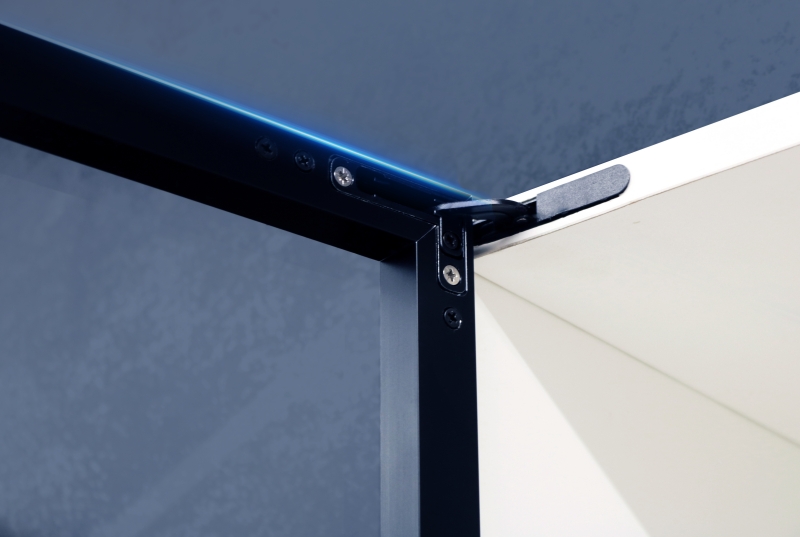
D HINGE mortise-in design for thin aluminum-frame doors.
Discreet installation with integrated soft-close damping.
DTC has specialized in furniture hardware since 1991, developing a full-category portfolio that spans hinges, slides, drawer systems, lifting systems, and storage solutions. The company operates more than 750,000 square meters of manufacturing space, holds over 2,000 global patents, and maintains a CNAS-accredited laboratory for durability, load, and salt spray testing. Products meet more than 30 international standards, including BHMA and EN, and are sold in over 130 countries and regions.
For architects, shopfitting contractors, and high-end furniture manufacturers, glass doors are often the detail that defines a project. The D HINGE Series supports that detail without compromising the thin-frame aesthetic. Across showrooms in Europe and North America and boutique projects in South America and North Africa, consistent alignment and quiet closing help protect expensive glass panels and reduce on-site corrections. A discreet mortise-in hinge also simplifies the specification because it can disappear into the frame rather than demanding a special cover or trim. Dealers can position the range as a focused solution for aluminum-frame and glass applications, while builders can specify it with confidence because the integrated damping and three-dimensional adjustment reduce the usual risks of sag, vibration, and misalignment. In short, the hardware should be selected as carefully as the glass itself. That selection discipline protects both the panel and the brand.
At DTC, we designed the D HINGE Series to support the clean appearance, controlled closing and precise alignment required by glass and thin-frame cabinet doors.
Explore the official DTC product range and contact our team for project support.