2026-08-31
Hospitality cabinetry lives a harder life than most residential furniture. Guestroom wardrobes, vanity cabinets, minibar units, and storage doors are opened by many different users with many different habits. Some close the door gently. Some do not. At the same time, hotels and boutique stays care deeply about quietness, consistent appearance, and low maintenance because those factors affect both guest experience and operating efficiency.
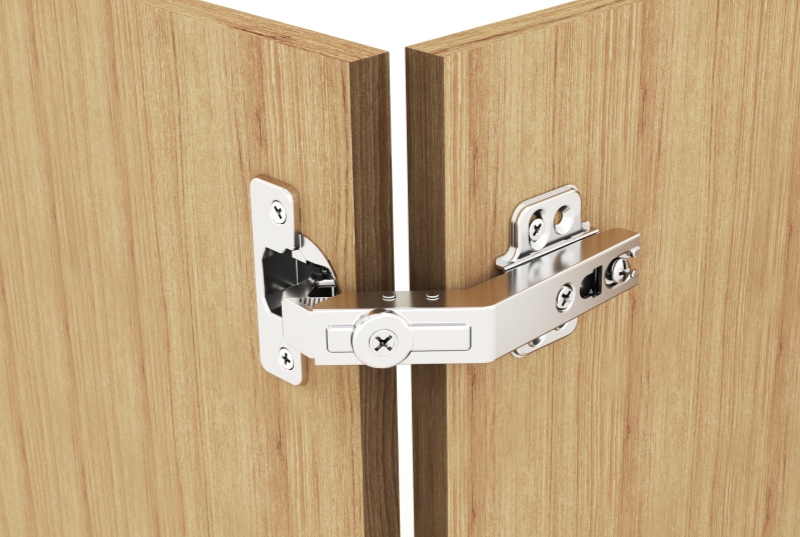
That combination makes hinge selection unusually important. A hinge that is acceptable in a low-use residential project may create noise complaints, appearance drift, or maintenance pressure in hospitality work. Soft-close hinges are therefore not just a comfort upgrade in these projects. They are often part of the operating strategy.
In guest accommodations, sound is part of the product. Hard cabinet closing can feel minor to the specifier and very noticeable to the guest, especially at night or in compact rooms where storage is close to the bed zone. Soft-close movement helps reduce that impact by slowing the final stage of closing and preventing repeated slam behavior.
Quietness also contributes to perceived quality. Guests may never name the hinge brand, but they immediately feel whether the room behaves calmly and consistently. In hospitality, that sensory impression matters.
Hospitality durability should be understood in practical terms. The hinge must keep closing smoothly after frequent, sometimes careless use. It must also hold alignment well enough that the cabinetry continues to look orderly across many rooms over time.
This is why compact damping, dependable mounting, and easy adjustment are valuable. The best hinge is not merely the one that survives a test condition. It is the one that reduces the chance of recurring maintenance attention in occupied properties.
Hotels do not only buy hardware. They buy future maintenance patterns. If a hinge system is difficult to remove, slow to adjust, or awkward to service across dozens or hundreds of rooms, the long-term operating cost rises. That is why clip-on structure and practical reveal adjustment have clear value in hospitality work.
The visual side matters too. Modern hotels and boutique stays often prefer cabinetry that feels clean and understated. A concealed hinge with integrated damping supports that look while keeping the close behavior refined.
Not every cabinet in a hotel is identical. Guestroom wardrobes, vanity cabinets, dry-bar storage, and service-area cabinetry can place different demands on the hinge. Some prioritize quietness above all. Others add humidity considerations, especially near bath zones. Some doors are lightweight, while others are taller and used constantly.
This is why hospitality content should focus on criteria rather than pushing a one-line sales claim. The right hinge depends on door type, use intensity, service expectations, and the design standard of the property.
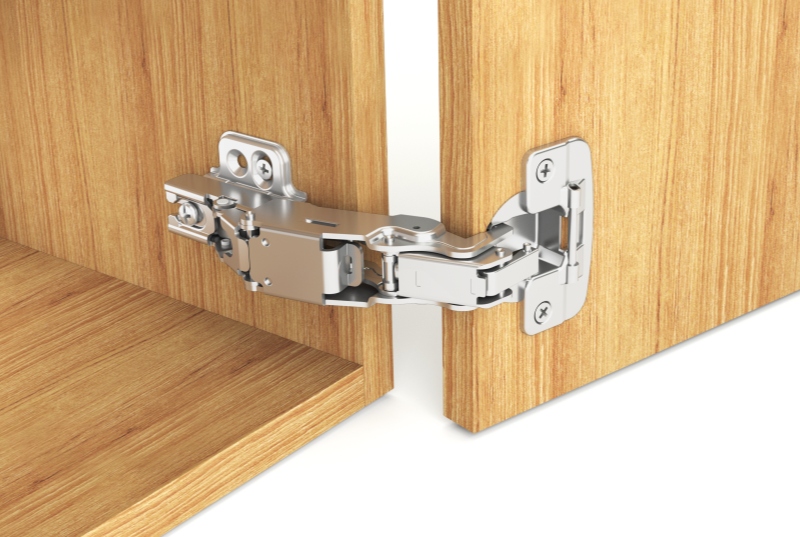
DTC's official product information presents the STYLISH C82 Series as a concealed hinge range with integrated damping and broad application across different living spaces. The series emphasizes elegant design, compact damping integration, and an "Anyway Snap-on" concept that supports efficient clipping and removal. These are relevant qualities in hospitality projects because they connect directly to quiet use, cleaner cabinet appearance, and easier room-by-room maintenance.
Instead of framing the hinge as a generic premium upgrade, it makes more sense to view it as a practical hospitality candidate when the project needs calm closing behavior, concealed presentation, and service-friendly fitting logic. That is a more credible and useful way to discuss specification.
An upward-opening door does not make every wall cabinet accessible by itself. Shelf height, cabinet depth, countertop clearance and the user's reach still need to be planned together. The lift mechanism should be selected after the door material and approximate weight are known, because opening force and hovering force must suit the finished panel. A cabinet maker should also confirm that the door can travel through its full path without meeting a ceiling, light fitting or adjacent tall unit.
|
|---|
For a custom project, the installer experience affects the final user experience. A mechanism that can be snap-fitted and adjusted in three directions makes it easier to correct the height, side position and depth after the door is mounted. This matters when a bank of cabinets must share consistent reveals. It also gives the team a practical way to tune the result on site rather than relying only on factory assumptions.
The TOP-STAYS SQ Series should therefore be evaluated as a lift-up support for a defined door condition. DTC describes it for single lift-up doors on wall and high cabinets, with a 107° opening angle, adjustable opening force, hovering force and closing speed. The series is also described for kitchen, living room, office and bathroom applications. These are useful specification facts; they should be checked against the actual panel and cabinet drawing before ordering.
The most useful benefit of a cabinet lift system is clearer access in the space directly in front of the cabinet. It can reduce interference from a side-opening door and make the opening easier to see into, but it does not replace sensible shelf planning or safe reach limits. When the cabinet layout, door weight and adjustment range are considered together, the lift-up format becomes a practical accessibility decision rather than a decorative upgrade.
In a hotel or boutique stay, a cabinet may be used by many guests who do not share the same closing habit. The hinge therefore needs to control the final movement consistently, including in a quiet guestroom at night. A calm close supports the room experience, but the project team should still test the complete door, because panel size, hinge count and installation alignment affect the result.
For a single cabinet, a difficult adjustment is an inconvenience. Across a property, it becomes a recurring maintenance task. Clip-on engagement, practical 3D adjustment and a clear removal method can reduce the time needed to realign or replace a door. The specification should record the hinge variant, finish, door condition and expected room use so maintenance teams can reproduce the original setup.
|
|---|
STYLISH C82 is described by DTC with integrated damping, a compact concealed form, Anyway Snap-on installation, 3D adjustment and multiple opening-angle options. The catalogue information also states 80,000 cycles, 48 hours of neutral salt spray and 30 hours of acidic salt spray for the titanium color. Those values can inform a hospitality specification, but they should be kept tied to the stated finish and test conditions.
Because hospitality furniture sees more varied users, more frequent operation, and greater sensitivity to noise and maintenance efficiency.
Reliable damping, practical adjustment, and easy clip-on service logic all help reduce maintenance burden.
They should consider both together, but the best results come from choosing hinges whose performance supports the design standard over time.
Yes, especially when the project wants quiet use, tidy cabinet interiors, and a cleaner overall furniture presentation.
Hospitality cabinetry needs hinges that support quiet operation, repeatable durability, and manageable maintenance. The strongest specifications are built around real property conditions rather than generic marketing language. When the hinge choice respects how hotel furniture is actually used, the result is better for guests and easier for operators to maintain.
Hospitality buyers often evaluate hardware through the lens of operations rather than isolated component cost. A hinge that reduces room maintenance time, limits guest-facing noise, and holds alignment across many identical rooms can create value that is larger than its unit price difference alone.
That is why cabinet hardware selection for hotels and boutique stays usually benefits from a property-level perspective. Quietness, repeatability, and service efficiency all matter because they influence how smoothly the entire room inventory can be maintained over time.
In hotels and boutique stays, cabinet hardware is evaluated across hundreds or thousands of guest interactions rather than a single showroom demonstration. The quieter and more stable the hinge remains over that period, the more effectively it supports the property's design standard and maintenance targets.