2026-08-31
Wide kitchen drawers are one of the most useful storage upgrades in modern cabinetry. They hold pots, pans, tableware, containers, and oversized utensils in a way that narrow drawers cannot. But width also creates a performance challenge. As the drawer gets wider, the chance of uneven loading, side-to-side movement, and skewed opening increases. A drawer that looks impressive when closed can feel unstable when used every day.
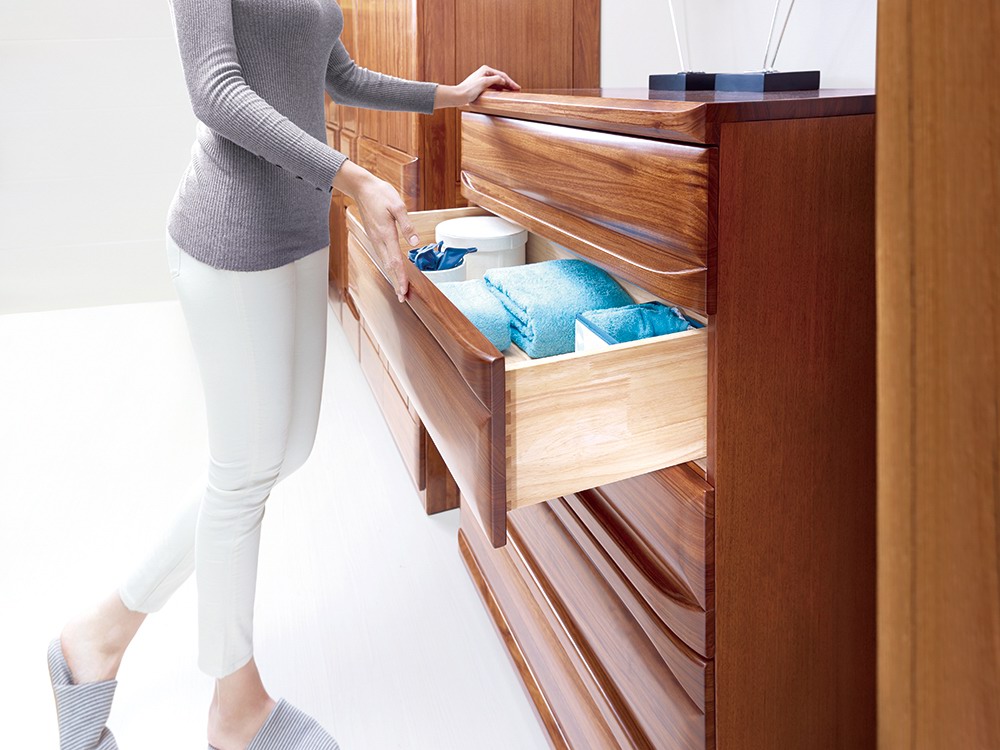
This is why synchronization is such an important topic in undermount slide selection. In standard drawers, good concealed slides may be enough. In wide drawers, the system often needs something more: a way to keep both sides moving together under real-life off-center force.
Synchronized undermount slides connect the left and right running sides so they operate in step rather than behaving like two completely independent tracks. This matters because users rarely pull or press a wide drawer at the exact center every time. They approach from one side, reach with one hand, or load weight unevenly.
Without synchronization, those conditions can produce racking, hesitation, or a slightly twisted feeling during motion. Over time, that inconsistency can also contribute to wear and alignment complaints.
Kitchen drawers are not just wide. They are often heavily loaded and frequently used. A cookware drawer may carry concentrated weight. A dish drawer may be opened several times a day. A wide pantry drawer may be accessed quickly during cooking when the user is not thinking about balanced force at all.
That is the real test for slide performance. The slide should not require perfect user behavior in order to feel smooth. It should tolerate common real-world habits while maintaining stable motion and controlled extension.
Side-mount ball bearing slides remain useful in many furniture categories, but wide kitchen drawers expose their limitations more clearly. Side-mount systems support the drawer from the sides, and the left and right tracks typically run more independently. In a standard-width drawer, that may not be a problem. In a very wide drawer, small force differences can become easier to feel.
Synchronized undermount slides approach the problem differently. Because the system is concealed below the drawer and linked for coordinated movement, it can provide a calmer running feel in wide kitchen applications. The support logic and movement control are simply better suited to drawers that are both wide and frequently loaded.
The most obvious benefit is reduced wobble. When both sides move together, the drawer resists the uneven sensation people often describe as looseness. The opening stroke feels more direct, and the closing path stays cleaner.
Synchronization also helps preserve the impression of quality. In premium kitchens, wide drawers are usually a visual focal point. If the drawer shakes or pulls unevenly, the hardware experience undermines the cabinetry. Stable motion is not just about mechanics; it supports perceived project quality.
Finally, stable movement can reduce the need for later adjustment because the system experiences less uncontrolled side stress during everyday use.
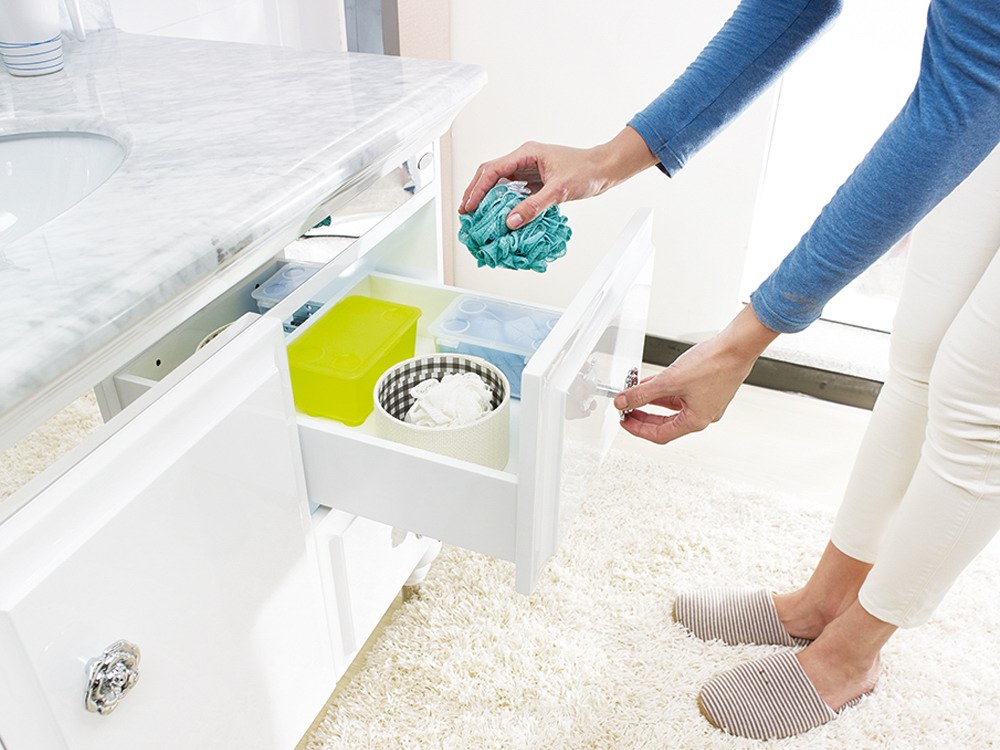
DTC's official information for the MAGIC-MOVE Series highlights synchronized full-extension running, concealed undermount installation, nylon rollers for quiet gliding, and both soft-close and push-open versions. DTC also notes that the push-open version uses a synchronizing rod so even wide drawers can open when the front is pressed in any position. The series is offered in 40 kg and 60 kg versions and includes tool-free height, side, and depth adjustment at the front locking devices.
This is precisely the kind of specification that matters in wide kitchen drawers. Load capacity alone does not guarantee stable use. The synchronized movement concept is what turns a wide drawer from merely strong into reliably usable.
When evaluating slides for wide drawers, do not stop at extension length or nominal load rating. Ask how the system manages off-center use. Ask whether the left and right running sides are forced to move together. Ask whether the adjustment method is practical enough to achieve a tight final fit.
In premium kitchens, stability usually deserves priority over lowest initial cost because wide drawers tend to be high-visibility, high-use components. If the drawer holds heavy cookware or spans a large width, synchronized concealed running becomes even more relevant.
A wide drawer is more sensitive to uneven hand pressure than a narrow drawer. If one side starts before the other, the drawer can twist, scrape or feel unstable. Synchronization connects the two runners so the left and right sides respond together. This is a functional requirement: the drawer must extend, carry its load and return to the closed position without repeated lateral correction.
| Wide-drawer check | What to observe |
|---|---|
| Opening from the left | Both sides should begin moving together. |
| Opening from the center | The box should remain square in the cabinet. |
| Closing under load | The final movement should stay controlled and aligned. |
| Full extension | The rear of the drawer should remain supported and accessible. |
DTC describes MAGIC-MOVE as a hidden undermount slide with synchronized full extension, 40 kg and 60 kg options, front locking and tool-free height, side and depth adjustment. These features address different stages of the job: synchronization supports movement, load options support planning, and adjustment supports commissioning. They should be verified against the drawer box and actual contents rather than selected from width alone.
The installation team should test the widest and heaviest representative drawer before mass production. Put the intended cookware or storage load in the box, check the release and reinstallation sequence, and confirm that the front remains square after adjustment. This test is more informative than evaluating an empty drawer because it reveals how the system behaves in the condition the user will experience.
The wider the drawer, the more important it is to test it after the front, organizer and contents are installed. A box that appears stable when empty may show lateral movement when a heavy pan is placed on one side. Check the drawer from left, center and right positions, then inspect the reveals after several full-extension cycles.
If the movement is not square, first verify the box dimensions, runner spacing and synchronization connection. Adjustment should refine a correctly built drawer; it should not compensate for a cabinet opening that is out of square. This distinction helps protect both the running system and the finished furniture.
Because they are more sensitive to uneven pulling force, uneven loading, and twisting during motion.
It improves coordinated movement between the left and right sides, which reduces wobble, skew, and hesitation.
No. They are helpful in both push-to-open and soft-close systems, especially when width and stability are priorities.
No. Load rating matters, but movement control and synchronization are just as important in real use.
Wide kitchen drawers need more than generic hidden running. They need stability under uneven real-world use. Synchronized undermount slides address that problem directly by coordinating left-right motion, improving feel, and supporting better long-term performance in the drawers people rely on most.
The widest kitchen drawers are often the most heavily used: cookware storage, dish storage, internal waste systems, or broad pantry drawers. These are exactly the places where users pull from one side while carrying something in the other hand. A drawer that depends on centered, careful use is less likely to perform well in those real conditions.
By contrast, synchronized running helps the drawer behave more predictably even when the user interacts with it casually. That practical tolerance is one of the main reasons synchronized concealed slides are treated as a performance upgrade rather than merely a premium-looking detail.
When evaluating a wide drawer slide, the more useful question is whether the system remains composed under off-center use. Many apparent slide problems are really stability problems rather than pure strength problems. A synchronized system addresses both by controlling movement, not just carrying load.