2026-08-31
When people compare cabinet hardware, they often jump straight to brand names or finishes. But one of the most important decisions for wall cabinets comes earlier: should the door open upward or to the side? In modern kitchens, that choice affects daily workflow more than many people expect.
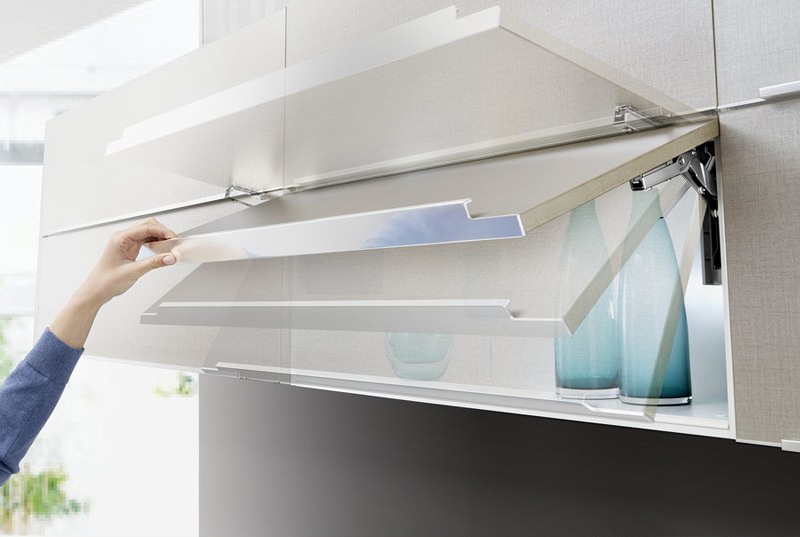
This is especially true in apartments, compact kitchens, and open-plan homes where the wall cabinet sits directly above an active preparation area. A door that looks acceptable on a showroom display can feel awkward once someone uses it every morning for coffee mugs, snacks, or dishes. Choosing between lift-up and side-hinged wall cabinet doors is therefore a functional planning decision, not just a styling preference.
Side-hinged doors are familiar, widely compatible, and easy to understand. For many standard cabinets they remain a perfectly reasonable solution. They work especially well when the cabinet is narrow, accessed only occasionally, or positioned where the open door will not interfere with a person standing at the counter.
They also make sense when a project needs specification consistency across many cabinet types. If the same concealed hinge system is already being used throughout the kitchen, a side-hinged wall cabinet can simplify production and installation.
That said, side-opening doors create a clear physical condition: once open, the panel occupies space beside the cabinet opening and partly in front of the user. Depending on cabinet location, that can be harmless or annoying.
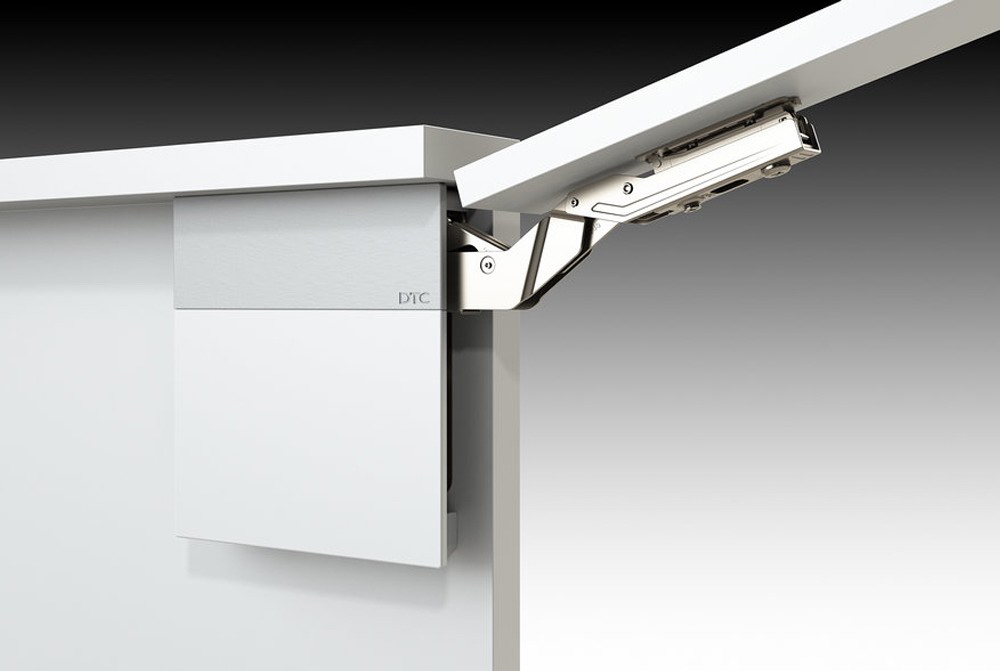
Lift-up doors are most valuable when front-of-cabinet working space matters. Instead of swinging across the user's path, the panel rises above the cabinet. This can reduce head-bump risk, keep the front zone clearer during use, and allow the user to stand closer to the cabinet while reaching inside.
This opening style becomes more attractive in kitchens where wall units store daily-use items or where multiple people share a narrow workspace. It also helps when the cabinet sits near a tall unit, fridge housing, or walkway that makes side-door clearance less comfortable.
The benefit is not only safety or comfort. The user often gains a more direct view into the cabinet interior, especially with wider openings. That improves the practical value of upper storage.
The simplest selection framework is to look at three things: frequency of use, cabinet position, and user movement. If the wall cabinet is opened often, located above a busy counter, and close to the user's head or shoulder path, a lift-up system deserves serious consideration. If the cabinet is secondary storage, narrow, or set away from the main work zone, side hinges may be more than enough.
Design language still matters, but it should follow function. Minimalist kitchens often favor lift-up doors visually, yet the stronger argument is that the upward opening motion can improve workflow. In contrast, a low-demand upper cabinet may not need the extra mechanism at all.
From a cabinet maker's point of view, the right opening style should install cleanly and remain adjustable enough to achieve a tidy final fit. For lift-up systems, opening force, hold position, and closing behavior all matter. For side-hinged doors, reveal control and hinge consistency remain the main concerns.
This is one reason the conversation should not be reduced to "lift-up looks better" or "hinges are simpler." Both can be true in certain cases, but neither is a useful rule by itself. A better question is which mechanism supports the intended cabinet behavior with the fewest compromises.
DTC's official product information for the TOP-STAYS SQ Series shows why lift-up systems are specified in real projects. The series is designed for single lift-up doors on wall cabinets and high cabinets, with a 107 degree opening angle, adjustable opening force, adjustable hovering force, and adjustable closing speed. It also supports snap-fit installation and 3D adjustment.
Those features are not abstract. They address the core reasons someone chooses a lift-up door in the first place: easier access, controlled door movement, and cleaner final alignment. This does not mean every wall cabinet should use a lift system. It means the hardware category exists because certain kitchen conditions genuinely benefit from it.
Kitchen hardware should follow the movement and load of each zone. An upper cabinet above a preparation surface may benefit from an upward opening support because the user stands close to the door. A base cabinet with a side-opening front needs a hinge selected for its door condition and frequency of use. A wide drawer needs a running system that addresses lateral stability and the intended load. Treating all three as one hardware decision usually creates avoidable compromises.
| Kitchen zone | Movement to plan | Questions to resolve |
|---|---|---|
| Wall cabinet | Upward opening | Is the door weight matched to the lift support? |
| Base cabinet | Side opening | Is closing force controlled for the finished panel? |
| Wide drawer | Full extension | Is synchronization needed to prevent racking? |
| Pantry or tall unit | Tall side opening | Can multiple hinges be aligned and adjusted? |
A specification is only useful if the workshop can repeat it. Confirm drilling patterns, cabinet clearances, adjustment access and the sequence for fitting the front. Hidden adjustment can protect the finished appearance, but it still needs to be reachable during commissioning. For a project with many repeated units, the team should trial one complete cabinet before releasing the full batch.
DTC’s product ranges cover different motions and furniture conditions, so product claims should stay attached to the correct series. TOP-STAYS SQ is described for single lift-up doors and a 107° opening angle. PIVOT-STAR C81 is described with variable soft-close speed, an integrated damper, Anyway Snap-on engagement and 4D adjustment. MAGIC-MOVE is described as a hidden undermount slide with synchronized full extension and 40 kg or 60 kg options. These are separate functions for separate zones, not interchangeable claims.
This approach produces a quieter and more usable kitchen through correct matching rather than through a single “premium” hardware package. The final choice should be recorded on the cabinet schedule so installers can reproduce it consistently.
A quiet kitchen is not created by choosing the same mechanism everywhere. Opening convenience, closing control and load support are different functions. The wall cabinet may need an upward motion, the base door may need a concealed hinge, and the drawer may need synchronized runners. Write those requirements separately on the hardware schedule, then review how each zone will be used beside the others.
This method also makes future service easier. When a replacement is needed, the installer can identify the motion, capacity and adjustment requirements from the schedule rather than guessing from the finished cabinet. A well-defined specification is useful because it connects the design intent to the actual production and maintenance process.
No. The better choice depends on cabinet location, frequency of use, and whether side-door interference is actually a problem.
Because many modern layouts prioritize clean movement around the counter and a less obstructed front working zone.
Often yes. They can reduce interference in compact layouts and make wall cabinets more comfortable to use above active counters.
Compare opening direction, clearance needs, access comfort, installation adjustment, and closing control.
Lift-up and side-hinged wall cabinet doors each have valid roles in kitchen design. The best choice comes from matching the opening style to the cabinet's job rather than following a trend. When accessibility, front clearance, and smooth upper-cabinet use matter, lift-up systems often offer the better answer.
The best time to choose between lift-up and side-hinged wall cabinet doors is before the cabinetry details are locked. Once backsplash height, appliance placement, and upper cabinet widths are defined, the project team can judge whether a side-opening panel will interfere with movement or whether a lift-up system would improve access enough to justify the mechanism.
This early decision also helps with consistency across the whole kitchen. Some projects use lift-up openings only above the main work zone and standard hinges in secondary wall cabinets. That kind of selective specification usually creates a better cost-to-function balance than using one opening style everywhere without regard to cabinet role.
Search users often start with a broad question such as whether lift-up or side-hinged wall cabinets are better, but the real answer always depends on scene and workflow. Content that explains those practical conditions tends to be more useful than content that treats one opening style as universally superior.