2026-08-31
Not every cabinet door lives the same life. A kitchen wall unit might be opened dozens of times a day. A bathroom mirror cabinet has to work in a humid space. A wardrobe door may be larger, taller, and more dependent on multi-hinge alignment over time. That is why the best soft-close hinge is rarely the one with the loudest product story. It is the one that matches the actual application.
For SEO content in the cabinet hardware space, this distinction matters because users are often not searching for a hinge in the abstract. They are searching for a hinge for a kitchen, for a bathroom vanity, for a mirrored cabinet, or for a wardrobe that must stay aligned after repeated opening and closing.
High-frequency use zones share a few baseline requirements. First, closing should be smooth and quiet enough to avoid repeated impact noise. Second, adjustment should be practical, because frequent use exposes even small alignment issues. Third, hinge choice should match the door's structure and usage pattern rather than relying on a one-size-fits-all approach.
Beyond that, the differences become more important than the similarities. Kitchens emphasize stable damping and long-term consistency across frequent cycles. Bathrooms add humidity and, in some cases, lighter mirror doors with different opening requirements. Wardrobes often involve taller doors where alignment and multi-hinge coordination become more critical.
Kitchen cabinet doors are among the most frequently used in the home. The priority here is not novelty. It is reliable everyday behavior. A kitchen hinge should close in a controlled way even when the household opens and closes the cabinet quickly, or when different cabinet doors carry different panel sizes and weights.
The best kitchen hinge choice usually offers predictable damping, dependable installation, and adjustment that makes reveal control manageable. For larger doors, the hinge also needs to work well in multi-hinge setups where inconsistent movement becomes obvious quickly.
Bathroom cabinetry has two separate hinge conversations. One is the standard vanity or storage cabinet door. The other is the mirror cabinet door. These are related but not identical needs.
For standard bathroom cabinet doors, soft-close behavior should still be smooth and stable, but material resistance and adjustment flexibility become more important because humidity can influence door alignment over time. Good adjustment makes small corrections easier if environmental conditions affect the cabinet.
For mirror cabinets, precise control often matters even more. Mirror doors can be lighter, but users are sensitive to closing feel, alignment, and the clean visual effect. In smaller bathrooms, wider opening angles may also improve access and reduce obstruction around the sink zone.
Wardrobe doors often have larger dimensions than small kitchen cabinet fronts, so hinge selection should account for multi-hinge coordination, door height, and long-term reveal stability. A hinge that is easy to clip on and fine-tune during installation can reduce labor time, but the more important question is whether the door still feels aligned and controlled after long-term everyday use.
This is especially relevant in floor-to-ceiling storage, built-in wardrobes, and family bedroom projects where the doors are opened constantly and visual misalignment becomes obvious fast.
It is tempting to talk about cabinet hardware mainly in terms of appearance, but that misses the real buying logic. Homeowners, cabinet makers, and procurement teams choose hinge solutions according to use conditions. Quietness, moisture response, opening angle, adjustment method, and compatibility with door size all come before surface-level design language.
That is why a bathroom article may include mirror hinge keywords even if the main discussion centers on concealed soft-close hinges. Search behavior is broad, but specification decisions are practical. Good content should reflect both.
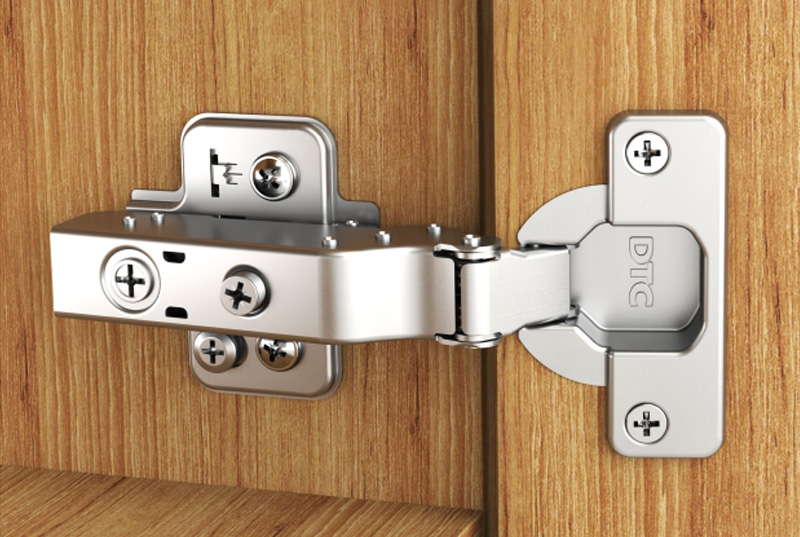
Based on DTC's official product information, the PIVOT-STAR C81 Series emphasizes variable soft-close speed adjustment, integrated damping, snap-on installation, and 4D adjustment. Those features make it a strong fit for kitchens, wardrobes, and other cabinet zones where door size variation and repeated use call for tuning flexibility and alignment control.
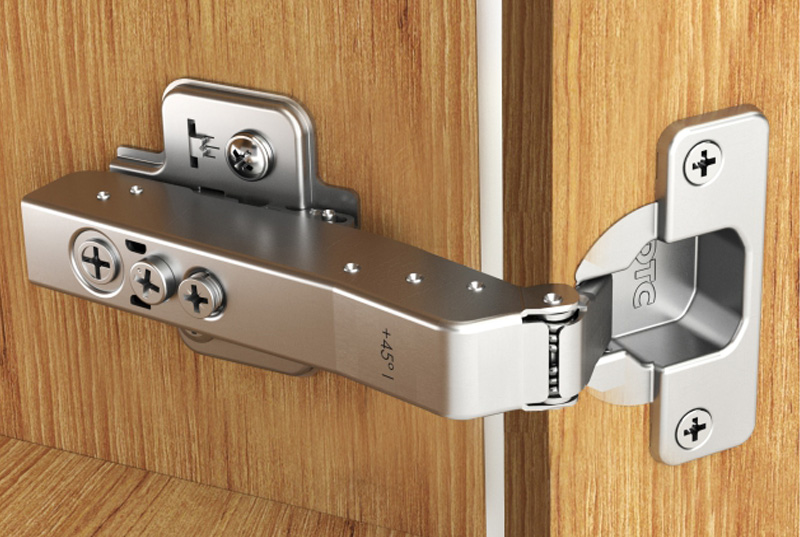
The STYLISH C82 Series is presented by DTC as an elegant concealed hinge line with integrated damping and wide application coverage across different spaces. That makes it relevant when discussing bathroom cabinets and mirror-adjacent storage, especially in projects where compact hinge form and clean interior presentation matter. The point is not that one series replaces every other option. The point is that different spaces benefit from different priorities.
Kitchen doors are opened while people are carrying dishes, preparing food or moving through a busy work zone. A soft-close hinge should deliver a controlled final movement and remain easy to realign when several doors sit beside one another. For larger doors, variable damping adjustment is useful because the panel condition is rarely identical across the whole kitchen.
Bathroom cabinetry includes at least two different use cases. A standard vanity door needs stable closing in a humid room, while a mirror cabinet door may be lighter and may need a different opening angle and a more precise closing feel. These should not be treated as interchangeable hinge applications. STYLISH C82 is described by DTC with integrated damping, multiple opening-angle options, a snap-on installation structure and 3D adjustment. The series information also states 80,000 opening-and-closing cycles, 48 hours of neutral salt spray and 30 hours of acidic salt spray for the titanium color. Those test values are specification data, not a guarantee that every installation has the same service life.
Wardrobe and tall storage doors place more emphasis on multi-hinge alignment. The installer must keep the long reveal even while ensuring that the hinges share the closing movement. PIVOT-STAR C81 is described with variable soft-close speed, Anyway Snap-on installation and 4D adjustment, making those features relevant to this application.
| Room | Main concern | Useful specification focus |
|---|---|---|
| Kitchen | Frequent use and consistent closing | Damping adjustment and alignment |
| Bathroom cabinet | Humidity and door type | Corrosion test data and opening angle |
| Mirror cabinet | Lighter panel and compact space | Precise closing and suitable geometry |
| Wardrobe | Tall panel and multi-hinge reveal | Installation consistency and 4D adjustment |
The sensible conclusion is application matching. No single hinge should be called the universal answer. Select the series and variant only after the door type, room conditions and installation method are documented.
The same hinge family may cover several rooms, but the specification still needs to identify the door condition in each room. In a kitchen, note whether the door is a standard overlay or a larger panel. In a bathroom, record whether it is a regular cabinet front or a mirror door. In a wardrobe, document the number of hinges and the required reveal. This prevents a general “soft-close hinge” label from hiding an unsuitable variant.
Before production, test one representative door with its final finish and hardware. Check that the hinge can be adjusted without disturbing neighboring fronts, and record the setting for repeated units. This small trial is particularly useful for projects combining kitchen, bathroom and wardrobe cabinetry because it turns room-specific requirements into a repeatable installation method.
Not usually. Kitchens prioritize high-frequency consistency, while wardrobes often place more emphasis on tall-door alignment and multi-hinge coordination.
Because bathroom search intent often includes both vanity cabinet doors and mirror cabinet doors, and the performance priorities are not exactly the same.
Yes. Bathroom environments make environmental durability and easy adjustment more relevant than in drier spaces.
Usually no. Users respond better to scene-based guidance first, with product references used to support the recommendation rather than overwhelm it.
Soft-close hinges for kitchens, bathrooms, and wardrobes should be selected around the realities of use: frequency, moisture, door type, size, and alignment demands. The closer the hinge choice matches the scene, the better the long-term result tends to be. That approach creates stronger SEO content and better practical guidance at the same time.
For SEO content and for real purchasing decisions, a scene-based approach is more credible than a product-heavy one. Kitchen doors, bathroom cabinet doors, mirror cabinets, and wardrobe fronts each create different expectations for moisture response, door size, opening angle, and closing feel. The best content should mirror that real selection logic.
This approach also broadens keyword relevance without weakening technical accuracy. Articles that naturally cover cabinet hinges, bathroom cabinet hinges, mirror hinges, and wardrobe hinge selection can match a wider range of search intent while still remaining useful to cabinet makers, distributors, and specifiers.
A strong hinge specification does not force one identical solution into every room. Instead, it uses the same decision logic everywhere: match the hinge to door type, use frequency, environment, and alignment expectations. That creates a more coherent cabinet package and usually improves both user experience and after-sales stability.