2026-08-31
Tall cabinet doors look clean and architectural, but they place more stress on hinge performance than standard base cabinet doors. As door height increases, so do leverage, weight, and the chance of misalignment over time. In custom projects, that means hinge selection cannot be treated as an afterthought. A hinge that feels acceptable on a smaller door may behave very differently on a full-height pantry or tall utility cabinet.
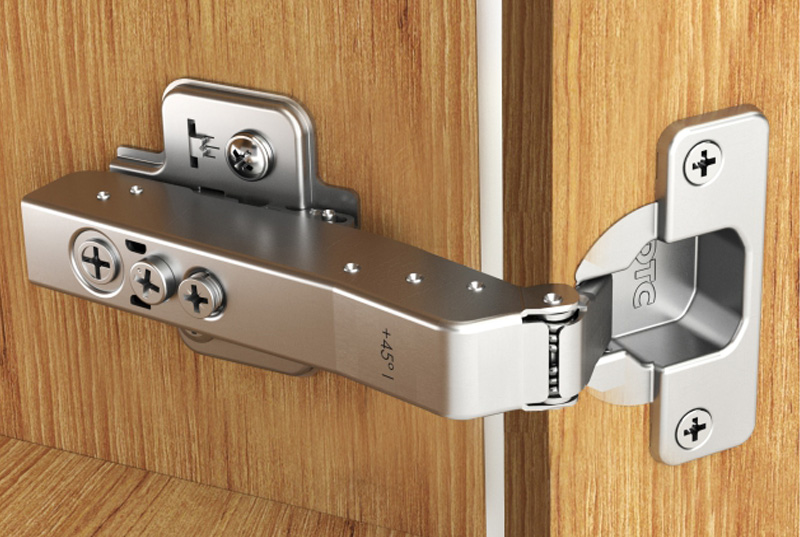
Soft-close performance becomes particularly important in this context. A tall door stores more movement energy during closing. If the damping is too weak, the door may close too fast or feel uncontrolled. If the adjustment range is too limited, the installer may struggle to fine-tune the final close after hanging multiple hinges on a heavy panel.
The challenge with tall doors is not just total weight. It is the combination of weight, height, and repeated use. A taller panel creates a longer force arm, which magnifies small deviations in alignment and makes closing behavior more sensitive to installation quality.
This is why tall doors often need more attention to hinge consistency. A single underperforming hinge in a multi-hinge arrangement can affect the whole closing feel. What users experience as "a cabinet that does not close quite right" is often the result of poor damping match, inconsistent hinge response, or limited adjustment during installation.
The first factor is damping control. A soft-close hinge for a tall door should provide controlled deceleration at the end of the closing cycle rather than an abrupt catch. In practice, door size and weight vary from project to project, so adjustability is useful. The ability to fine-tune closing speed can help the same hinge family perform across a broader range of panels.
The second factor is installation consistency. Tall doors often use three or more hinges, which raises the importance of easy clip-on installation and predictable engagement. Installers benefit from hardware that can be mounted, removed, and rechecked without fighting the mechanism each time.
The third factor is multi-directional adjustment. Precision alignment is not just a visual issue. Consistent reveals and proper door position affect how evenly the hinges share load and how smoothly the door closes over time.
The fourth factor is long-term stability. A hinge may feel smooth on day one and still create callbacks later if its damping and geometry are not suited to frequent use on taller panels.
Start with the door's real dimensions, expected usage frequency, and construction. A decorative pantry door in a showroom kitchen may have a different duty profile from a storage tower used constantly by a family. In both cases, installers should avoid choosing hinges only by opening angle or brand familiarity. The right question is whether the hinge can maintain controlled closing and accurate alignment on that specific panel.
It also helps to think in systems rather than single parts. Tall doors are usually part of premium cabinetry where visual precision, low noise, and long-term consistency all matter. Choosing a hinge with accessible adjustment and dependable clipping behavior can save time during installation and reduce alignment drift later.
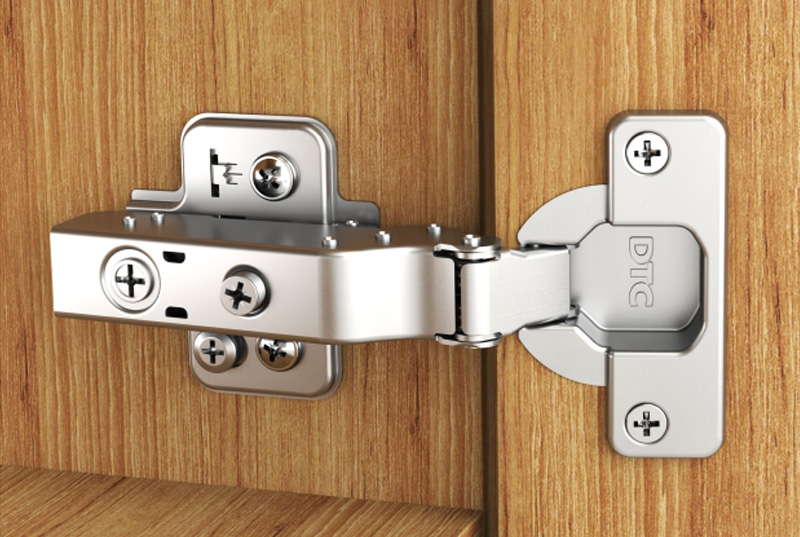
DTC's official product page describes the PIVOT-STAR C81 Series as a concealed hinge line with variable soft-close speed adjustment, a damper integrated in the hinge arm, and an "Anyway Snap-on" structure that supports front clipping, rear clipping, or combined clipping. The series also emphasizes secure snap-on connection and 4D adjustment.
Those features are highly relevant to tall cabinet work. Variable soft-close speed adjustment helps installers tune the door's final closing action to panel size and weight. Integrated damping within the hinge arm keeps the solution compact. The snap-on concept is particularly useful when several hinges need to be mounted and checked on a tall panel. Four-dimensional adjustment supports finer reveal control and cleaner final alignment.
DTC also positions the C81 family across several application conditions, including standard, thick-door, angled, and other hinge geometries. That flexibility is helpful when tall doors are part of a broader custom cabinetry package with mixed door formats.
One mistake is assuming that more hinges automatically solve every tall-door issue. Additional hinges help distribute load, but they do not compensate for poor damping choice or difficult adjustment. Another mistake is treating closing feel as a minor detail. In tall cabinetry, the closing action is one of the clearest signs of hardware quality because users notice it every time.
A third mistake is ignoring maintenance logic. In custom projects, installers and after-sales teams benefit from hardware that can be unclipped, adjusted, and reinstalled efficiently. This becomes more important as door size increases.
Door height alone is not a sufficient specification. Record the finished width, thickness, material, edge treatment and expected use frequency. A tall solid panel and a lighter framed panel may place different demands on the hinge even when their outside dimensions are similar. The number and position of hinges should also be planned before installation so the load is shared consistently across the door.
| Selection item | Site question | Effect on the result |
|---|---|---|
| Panel condition | What are the finished size, thickness and weight? | Establishes the starting point for damping adjustment. |
| Closing behavior | Does the project need a slower final close? | Guides soft-close speed tuning. |
| Hinge count | How many hinges will work on the panel? | Makes clip-on consistency and alignment more important. |
| Door geometry | Is the door standard, thick or angled? | Determines the appropriate hinge variant. |
Tall doors are difficult to hold and align while every hinge is being fitted. DTC describes PIVOT-STAR C81 with an integrated damper in the hinge arm and variable soft-close speed adjustment. Its Anyway Snap-on structure supports front clipping, rear clipping or both, so the installer has more than one practical engagement method. The stated 4D adjustment is relevant after the door is mounted because small changes in height, side position, depth and related alignment affect the reveal across a tall panel.
After installation, open and close the complete door several times. Check the final closing stage, the consistency between hinges, the reveal at the top and sides, and whether the panel remains aligned when loaded with its actual cabinet contents. If the close is too quick, use the available adjustment rather than forcing the door or adding an unrelated damper. This simple commissioning step helps separate a genuine hardware issue from an installation issue.
For custom projects, PIVOT-STAR C81 is best presented as a configurable hinge option for demanding tall-door conditions. Its value lies in the combination of adjustable closing behavior, a practical snap-on interface and 4D adjustment, not in an unsupported promise that one setting fits every door.
Because height increases leverage and makes closing behavior more sensitive to panel weight, alignment, and repeated use.
It is often very useful. Tall doors vary widely in size and construction, so adjustable closing speed helps achieve a more controlled final action.
Tall doors usually use multiple hinges. Faster clipping and unclipping improves installation efficiency and makes fine alignment easier.
It helps installers control reveals and final door position more precisely, which supports both appearance and long-term performance.
Soft-close hinge selection for high cabinets and tall doors should focus on real performance under load: controlled closing, dependable multi-hinge installation, precise adjustment, and long-term stability. When those factors are handled well, tall doors feel refined instead of demanding. That is the difference between hardware that merely works and hardware that supports a clean project delivery.
For tall doors, the installation phase often determines whether the project remains stable months later. Consistent hinge cup drilling, even reveal planning, and careful adjustment after the door is fully loaded all influence the long-term feel of the cabinet. Hardware with clearer adjustment logic makes this process less dependent on trial and error.
Many callbacks on tall cabinetry come from small misalignments that became more visible over time. That is why specifiers often value adjustment access and repeatable hinge response just as much as catalog specifications. A hinge that is easy to fine-tune in the field can help maintain both appearance and function after handover.
Before finalizing a hinge for tall doors, project teams should confirm door dimensions, expected opening frequency, cabinet construction, and the number of hinges required per panel. They should also review whether the project needs thicker-door compatibility, fast service access, or tighter visual reveal control across a bank of cabinets. In many custom jobs, these practical checks make a bigger difference than any single headline feature.